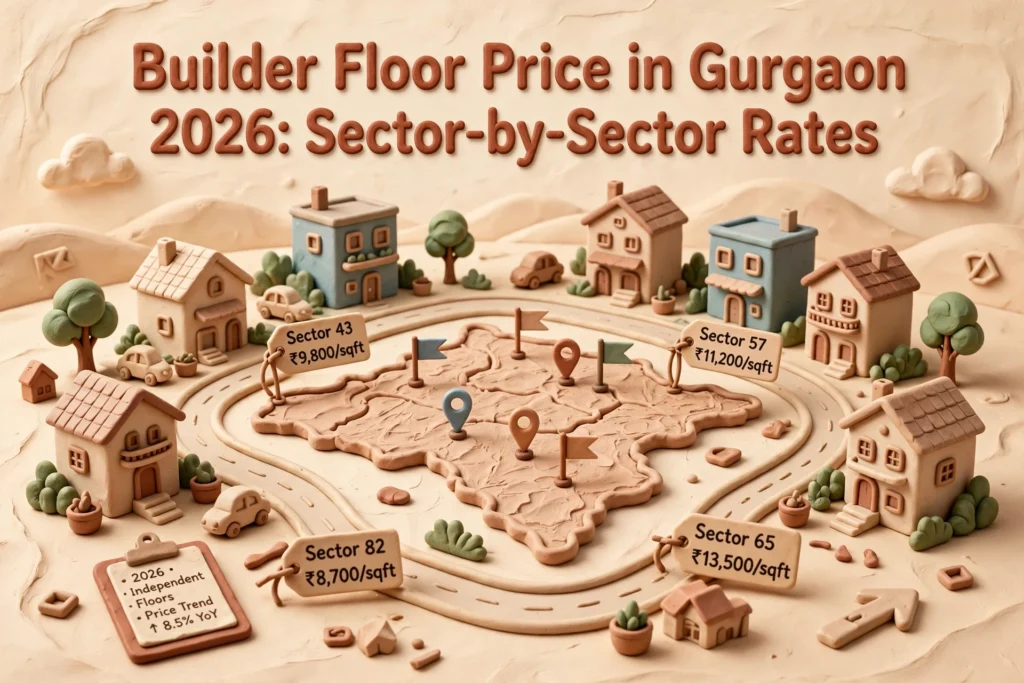

Quick Summary: Builder floor prices in Gurgaon can’t be reduced to one citywide rate because a 250-square-yard plot in Sector 57 and a DLF Phase 2 floor sit on different land, road widths, and approval records. The guide separates plot benchmarks (price per square yard) from finished-floor asking prices, and says plot size, floor level, lift, parking, and clean approvals drive most of the 20-30% spread between floors on the same lane. It marks every rate for monthly verification rather than quoting stale figures, and Homezop notes it updates these rates from live market readings and offers floor-by-floor site visits.
The builder floor price in Gurgaon cannot be captured by one citywide number. A 250-square-yard plot in Sector 57 and a builder floor in Gurgaon’s DLF Phase 2 sit on different land, different road widths, and often different approval records, so the price per sq yard Gurgaon buyers see varies widely between them.
What changes the figure? Plot size, floor level, lift and parking, and whether the approvals are clean. This guide breaks the builder floor cost Gurgaon sellers quote into sector-by-sector benchmarks, so you can compare like with like.
If you are searching for a builder floor in Gurgaon under 1 crore, the same logic applies at a smaller scale. As a builder, we update these rates monthly from live market readings rather than stale listings.
How should you read Gurgaon builder-floor prices in 2026?
Builder floor price in Gurgaon is quoted two ways, and mixing them up costs buyers real money. The first is a land rate, the second a finished-home rate. They measure different things.
What does price per square yard mean for a builder floor?
Price per square yard is a land benchmark. It applies to the plot, not to your floor. If a 200-square-yard plot trades at a certain rate, that rate reflects location, road width and freehold status. Your floor then takes a share of that land value, often a third or a quarter depending on floors built. So a per-yard quote tells you what the ground is worth. It does not tell you what the builder will charge for the finished floor above it. The two move together but never at the same pace.
Why does a per-floor figure need more context?
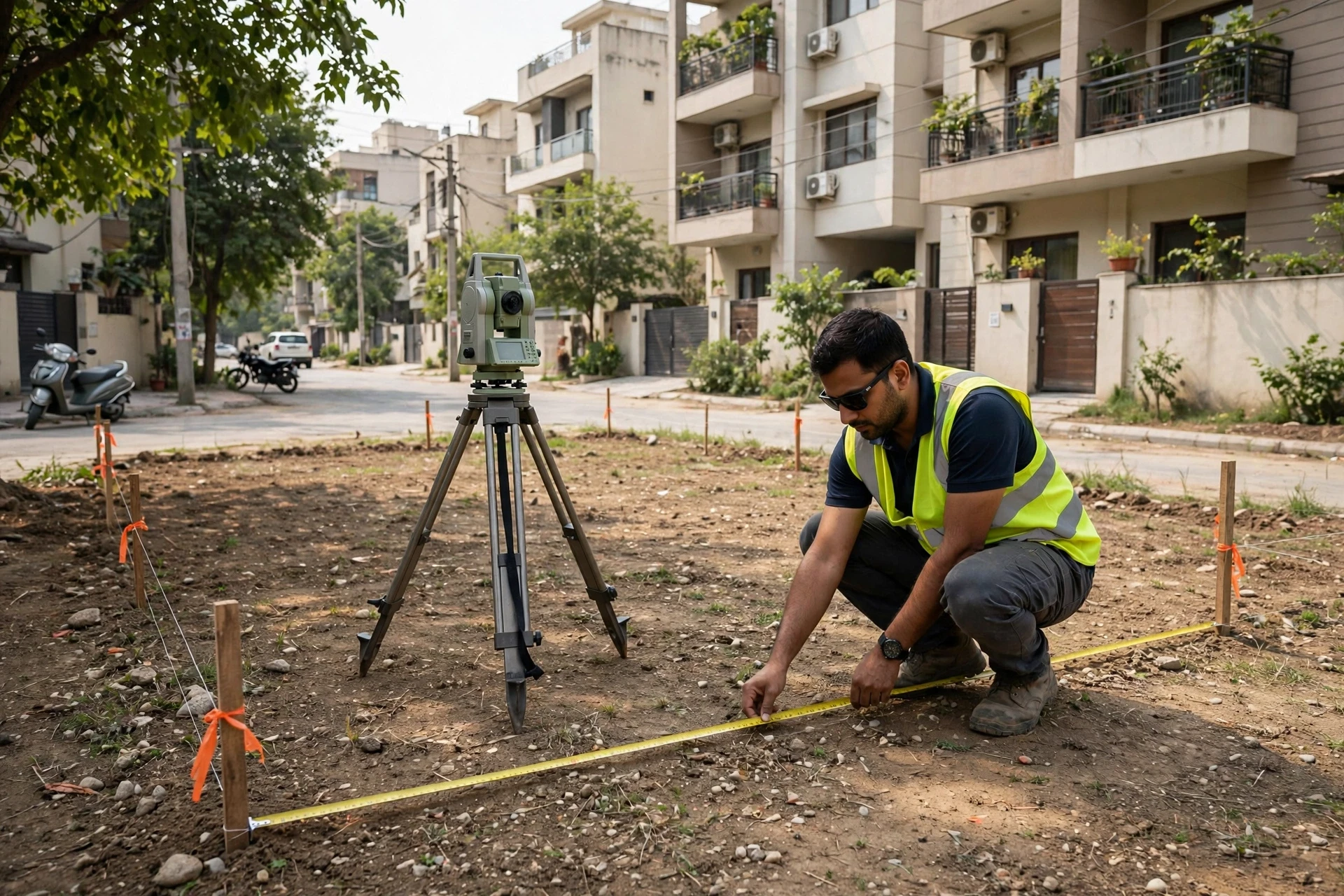
A per-floor price bundles land share, construction, finishing and approvals into one number. Two floors in the same sector can differ by a wide margin. Floor level matters: ground floors usually command a premium for garden access and parking. Lift, stucco vs. basic finish, covered parking, stilt provision and RERA status all move the number. So treat any quoted rate as a starting point. Ask what plot size, floor level and specification sit behind it before you compare one floor against another.
Check the floor layouts and specifications on our project pages, then compare like with like.
What are the builder-floor price references by Gurgaon micro-market?
Builder-floor prices in Gurgaon do not follow one number. Two floors on the same road can differ by 20 percent or more, so the honest answer is a set of references by locality, updated monthly, not a city-wide average.
What should the monthly locality rate table include?
A useful table tracks four things per locality. First, the plot benchmark: current land rate per square yard on a typical 9-metre road. Second, asking price per floor for a standard 4BHK on that plot. Third, the land-share share, since a floor on a 300-square-yard plot is worth more per square foot than one on a 150-square-yard plot. Fourth, notes on approval status and lift or parking changes, because those move the number as much as location does.
| Field | Why it matters |
|---|---|
| Plot rate per sq yd | Anchors the land value you are buying |
| Asking price per floor | The real quote you will negotiate |
| Plot size and land share | Larger plots justify higher per-floor prices |
| Approval and spec notes | Lift, stilt parking, RERA status |
How do rates vary across established central and southern neighbourhoods?
The DLF Phases 1 to 3, Sushant Lok, South City and Sector 46 belt carries some of the deepest resale demand in Gurugram. Plots here are mostly smaller and held for decades, so clean-title floors with lift and stilt parking command a clear premium over builder inventory without approvals.
| Micro-market | Plot rate (per sq yd) | Typical asking per floor |
|---|---|---|
| DLF Phase 1-3 | [VERIFY: current rate] | [VERIFY: current rate] |
| Sushant Lok I | [VERIFY: current rate] | [VERIFY: current rate] |
| South City I / II | [VERIFY: current rate] | [VERIFY: current rate] |
| Sector 46 | [VERIFY: current rate] | [VERIFY: current rate] |
Treat these as negotiating anchors, not final numbers. Floor level, road width and interior finish routinely move a quote by 10 to 15 percent within one sector.
How do Sector 57, Palam Vihar and newer corridors compare?
Sector 57 sits between Golf Course Road and Golf Course Extension, so it picks up demand from both. Rates run high for the road quality and lift inventory available there.
| Micro-market | Plot rate (per sq yd) | Typical asking per floor |
|---|---|---|
| Sector 57 | [VERIFY: current rate] | [VERIFY: current rate] |
| Golf Course Extension | [VERIFY: current rate] | [VERIFY: current rate] |
| Dwarka Expressway sectors | [VERIFY: current rate] | [VERIFY: current rate] |
| Palam Vihar | [VERIFY: current rate] | [VERIFY: current rate] |
Palam Vihar trades below the Golf Course belt on plot rate but offers larger plots and more villa-like density. Dwarka Expressway is the newest corridor, so much of the floor stock is builder-new with RERA registration, which changes both price and risk profile.
Which old Gurgaon sectors belong in the reference?
Sectors in old Gurgaon, roughly 4, 5, 7, 9, 10, 12 and the areas around Sadar Bazaar, belong in the table for completeness. Plot rates there are far lower, but resale liquidity is thinner and construction quality varies sharply between plots. For a Rs 4 to 10 crore budget, these sectors matter mostly as a comparison point. They show what the same rupee buys when you leave the Golf Course and central belt behind, and why land share, approvals and road width deserve as much weight as the headline rate.
If you want a floor-level read on any of these micro-markets, our team at Homezop can walk you through current quotes on a private site visit.
What explains the price spread between two builder floors?
Two floors on the same lane can differ by 20-30% in price. The plot explains most of it, the floor explains the rest.
How do plot size, road width and land share affect value?
Start with the plot, because an independent floor is really a share of land. A 300 square yard plot on a 30-foot road is a different asset from a 500 square yard plot on a 60-foot road, even when the built area looks similar. Wider roads mean easier access, better parking, more light and stronger resale demand.
Land share matters most. On a four-floor plot, your undivided share is a quarter of the land. On a three-floor plot, it is a third. Same street, meaningfully different long-term value. This is the first number to confirm in writing, before any talk of finishes.
Plot shape counts too. A regular rectangle builds better than an awkward L-shape with wasted corners. Corner plots usually carry a premium because they get frontage on two sides.
The table below shows the levers, in rough order of impact:
| Factor | What to check | Effect on value |
|---|---|---|
| Plot size | Square yards, documented in sale deed | Bigger share of land, higher base value |
| Road width | Recorded width of the facing road | 40-60 ft roads command a premium |
| Land share | Undivided share stated in the deed | Fewer floors per plot means more value |
| Corner position | Facing two roads | Better light, access, parking |
| Plot shape | Regular vs irregular boundary | Regular plots waste less area |
How do floor level, lift and parking change the comparison?
Within the same building, the floor you buy shifts the price again. In Gurugram, most family buyers want the first or second floor: close enough to the ground for daily use, high enough for privacy and air. Ground floors suit those who want a garden or step-free access, and often price near or above upper floors for that reason. Third and fourth floors typically sit at the other end, unless a lift changes the equation.
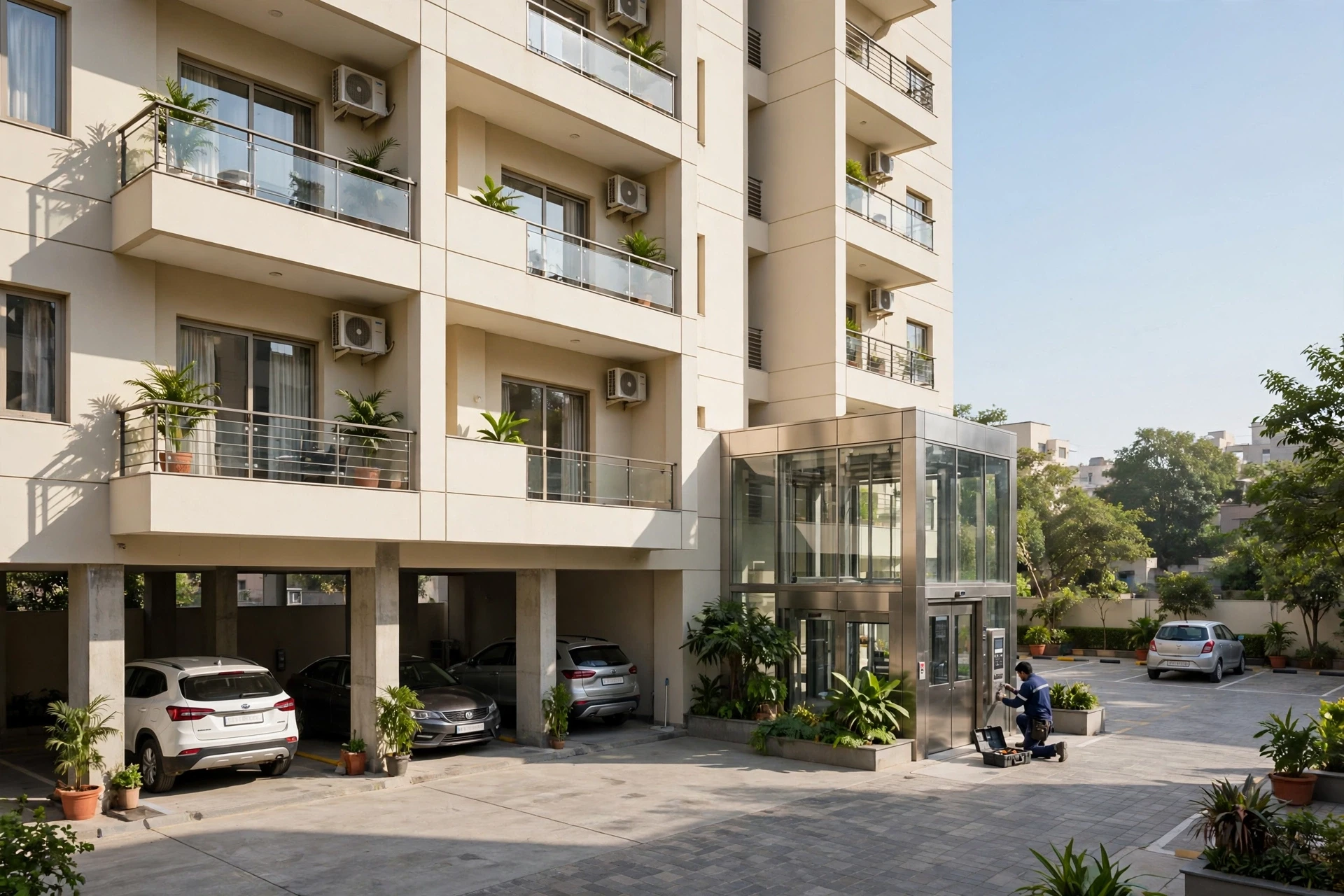
A lift narrows the spread between levels, because a fourth floor with a lift is no longer a climb. Check the lift serves every floor and who maintains it.
Parking is the quiet deal-breaker. Confirm the number of stilt or open spaces, whether they are exclusive to your floor, and how guests park. A floor with two dedicated spaces competes with similar floors that offer one.
How can you compare total floor cost and ownership value?
Two floors quoted at the same number can cost you very different amounts. The rate alone tells you little until you know what it is measured on, and what you get for it. Compare like with like, then judge the ownership itself.
How do carpet, built-up and super area change the quoted rate?
Buyers often compare a builder floor’s rate against an apartment’s without checking the measurement. These are different bases, and the gap is large.
- Carpet area: the usable floor space inside the walls. What you actually live in.
- Built-up area: carpet plus walls and balconies, usually 10-20% more.
- Super built-up area: built-up plus a share of common areas. Apartments are often quoted on this, which inflates the per-sq-ft rate illusion.
A floor quoted at [VERIFY: current rate] on carpet can look dearer than an apartment quoted on super area. It is not. Divide each quote by its own basis, or better, convert everything to carpet, before you compare. On independent floors, ask for the carpet figure in writing and check the sale agreement matches it.
Are builder floors cheaper than apartments in Gurgaon?
On rate alone, sometimes. On value, the honest answer is: it depends on what you are buying.
A builder floor gives you a share of the land, fewer common charges, lower density and often better carpet efficiency, since no super built-up loading applies. An apartment buys you amenities, security infrastructure and managed upkeep.
The real comparison is total cost of ownership over 10 years: price, maintenance, society dues, and resale behavior. Floors in established sectors like 46 or 57 hold land value; apartments depreciate on the building side. For a fuller breakdown, see our guide to luxury builder floors in Gurgaon.
What should buyers verify before relying on a quoted rate?
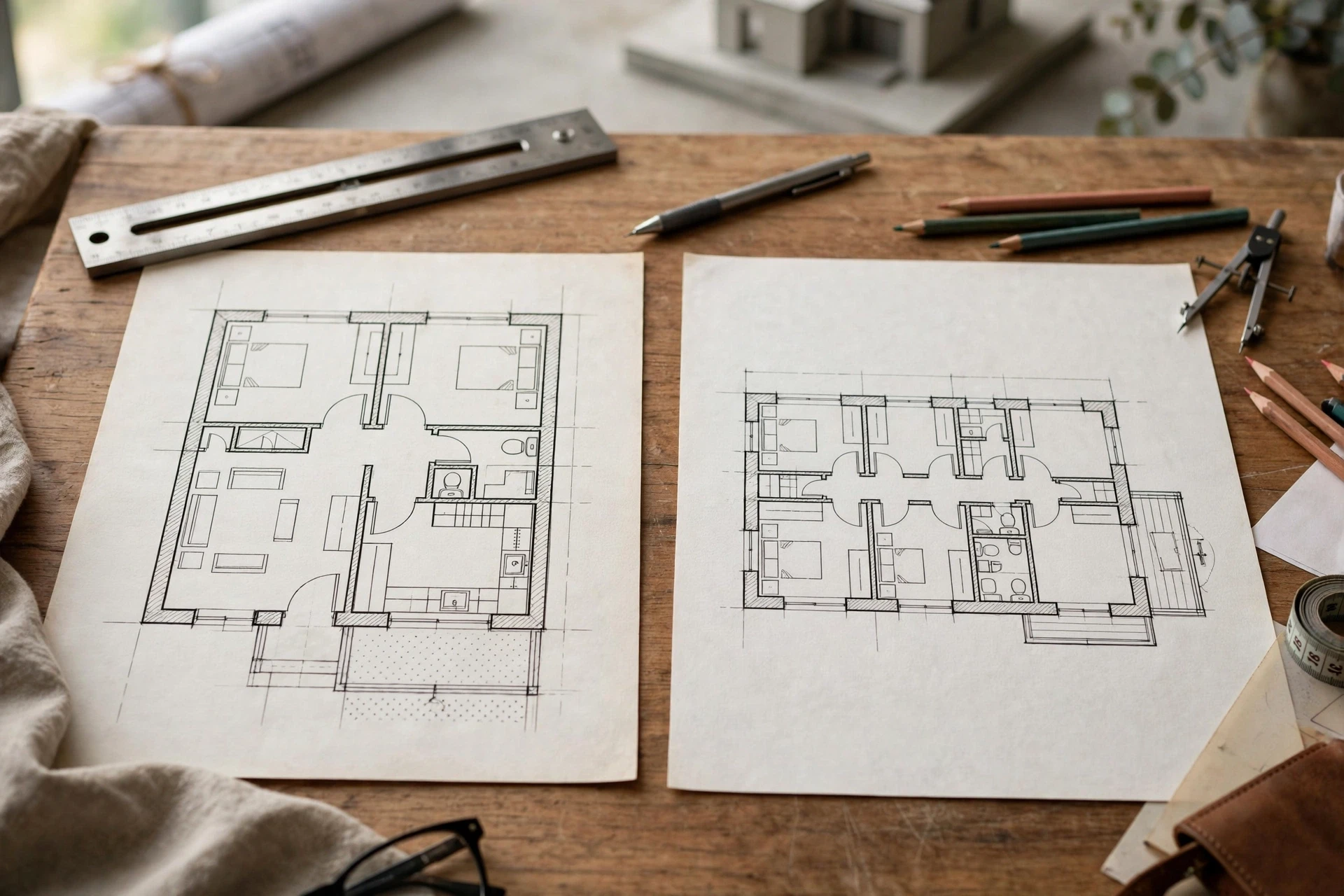
A quoted rate is only as good as the property behind it. Two floors on the same street can differ by 20% or more once you check what is actually registered, sanctioned and included. Before you anchor on any number, verify the paperwork and then test the price against real references.
Which property and approval records should be checked?
Start with title and approval status, because these move the rate more than finishes do. Ask for the registered sale deed of the parent plot and confirm the seller’s name matches. Check the RERA registration of the floor or colony on the Haryana RERA portal, and ask for the building plan sanction from the municipal corporation or HUDA.
Then verify the components of ownership: the exact land share in square yards, whether stilt parking is registered or just promised, and whether a lift has been sanctioned where one is offered. Confirm the sanctioned floor count matches what is built, since an extra unapproved floor trades at a discount that is never visible in the quoted rate.

How should you validate the price reference?
Treat every quoted rate as a claim, not a fact. Ask what the rate covers: plot area or built-up area, with or without parking, stilt or upper floor. A rate per square yard on plot area reads very differently from one on super area.
Next, benchmark it. Compare at least three recent registered transactions on the same or adjoining roads, not asking prices. Registry data reflects what buyers actually paid. Where a floor sits above or below that band, the seller should be able to point to the reason: road width, corner plot, lift, park facing or approval status.
Key check: never accept a rate quoted only on super built-up area. Insist on the plot-based number alongside it, so you can compare floors and sectors on the same basis.
How should this Gurgaon builder-floor price guide be updated each month?
A price guide is only worth reading if the numbers are current. Treat this page like a ledger, not an article: fixed structure, refreshed rates, dated at the top.
What is the monthly rate-update checklist?
Work through the same seven steps each month, in the same order:
- Replace every [VERIFY: current rate] with a confirmed asking price for that sector and floor configuration.
- Re-check one benchmark sale per micro-market, ideally a plot sale or fresh floor deal, not a stale listing.
- Note any rate change direction: up, flat, or down. A flat month is still information.
- Flag sectors with new approvals, RERA registrations or infrastructure news, since those move prices fastest.
- Remove any project or listing that has sold out or gone quiet.
- Update the “last verified” date beside each table so readers know how fresh the figure is.
- Record the source of each rate in an internal note, even if the page never names it.
Keep the tables and structure untouched. Only numbers, dates and flags change. That discipline is what lets a buyer trust the figure they read on a Tuesday morning.

Rates on paper only get you so far. Each floor prices differently because of plot share, floor level and build spec. If you are evaluating a specific sector, talk to us at Homezop or arrange a quiet site visit. We will walk you through the numbers floor by floor.
Frequently Asked Questions
Q1: Which top builders offer luxury floors in Gurgaon?
Established names include Laburnum Developers, Trehan, CBS Developers, BLF Developers, Avaak Floors and Homezop. Compare land share, construction spec and RERA status rather than brand recall alone.
Q2: Which builder floors offer the highest land share?
Lower-density plots, typically 300-500 square yards in DLF Phases and Sector 57, give each floor more land share. Ask for the exact undivided share in writing.
Q3: What is the average builder floor price per sq ft in Gurgaon in 2026?
[VERIFY: current rate]
Q4: Which sectors in Gurgaon have the most expensive builder floors?
[VERIFY: current rate]
Q5: How much do 3 BHK builder floors cost in Gurgaon?
[VERIFY: current rate]
Q6: Are builder floors cheaper than apartments in Gurgaon?
Usually yes per sq ft of carpet area, with better land share. [VERIFY: current rate]
Q7: Which Gurgaon sectors offer the best value builder floors in 2026?
[VERIFY: current rate]
Q8: How much do builder floor prices appreciate in Gurgaon each year?
[VERIFY: current rate]
A Clearer Way to Read Gurgaon Builder-Floor Prices
Builder-floor prices in Gurgaon move sector by sector, so a single citywide number misleads. This guide separates plot benchmarks from asking prices, and marks every rate for monthly verification rather than quoting stale figures. The spread comes down to land: plot size, road width, floor level, lift and parking, plus approval status. Golf Course Road and DLF Phases behave differently from Nirvana Country, Palam Vihar or old Gurgaon sectors, and your comparison should respect that. If you are weighing a purchase, start with builder floors in Gurgaon fundamentals, then price the specific sector, then the specific floor.