

Quick Summary: In a Gurgaon builder collaboration, you contribute the plot and the builder funds construction, approvals and building work, then the finished project is split between you. The article stresses that most disputes come from vague paperwork, not bad intent, so the agreement must spell out your exact floors or units, the power of attorney limits, approval responsibilities, RERA registration, delay remedies and exit rights. It also warns owners to get their own chartered accountant to check capital gains, stamp duty and GST before signing anything. Homezop, which does these deals, says a builder confident in its drawings and funding will accept these safeguards without hesitation.
A builder collaboration in Gurgaon lets your plot become finished floors without you funding construction. The real decision sits in the paperwork: which rights you grant, which floors you keep, and what happens if the builder stops. Most plot collaboration Gurgaon disputes come from vague terms, not bad intent. This guide walks through the joint development agreement Gurgaon owners actually sign, typical owner builder share Gurgaon structures, approvals, timelines and tax points worth checking. As a builder who does these deals, I will also flag where you should push back before signing any collaboration agreement builder floor arrangement.
What Does a Builder Collaboration in Gurgaon Actually Exchange?
A builder collaboration in Gurgaon is simple at its core: you contribute the plot, the builder contributes money, approvals and construction, and the finished project is split between you. What varies is how it is split.
Area share, revenue share or a combination
Most deals in Gurgaon and Gurugram take one of two forms. In an area share, you receive a fixed portion of the built-up space – certain floors or units, decided before construction starts. In a revenue share, the builder sells everything and pays you an agreed portion of the proceeds. Some arrangements mix the two: units for you, plus a slice of sales revenue. The joint development agreement Gurgaon builders sign must name the structure precisely, because your rights differ sharply under each one.
Compare the actual units, not just the percentage
A higher percentage can hide a worse deal. Compare the finished units you would actually receive: which floor, which facing, carpet area versus super area, parking count, and whether your share carries its proportional land rights. Two deals quoted at the “same” percentage can differ by crores once floor, specification and land share are counted. Ask the builder to price your share in today’s market terms, not on a brochure rendering. That is the number to negotiate.
What Should a Collaboration Agreement Protect?
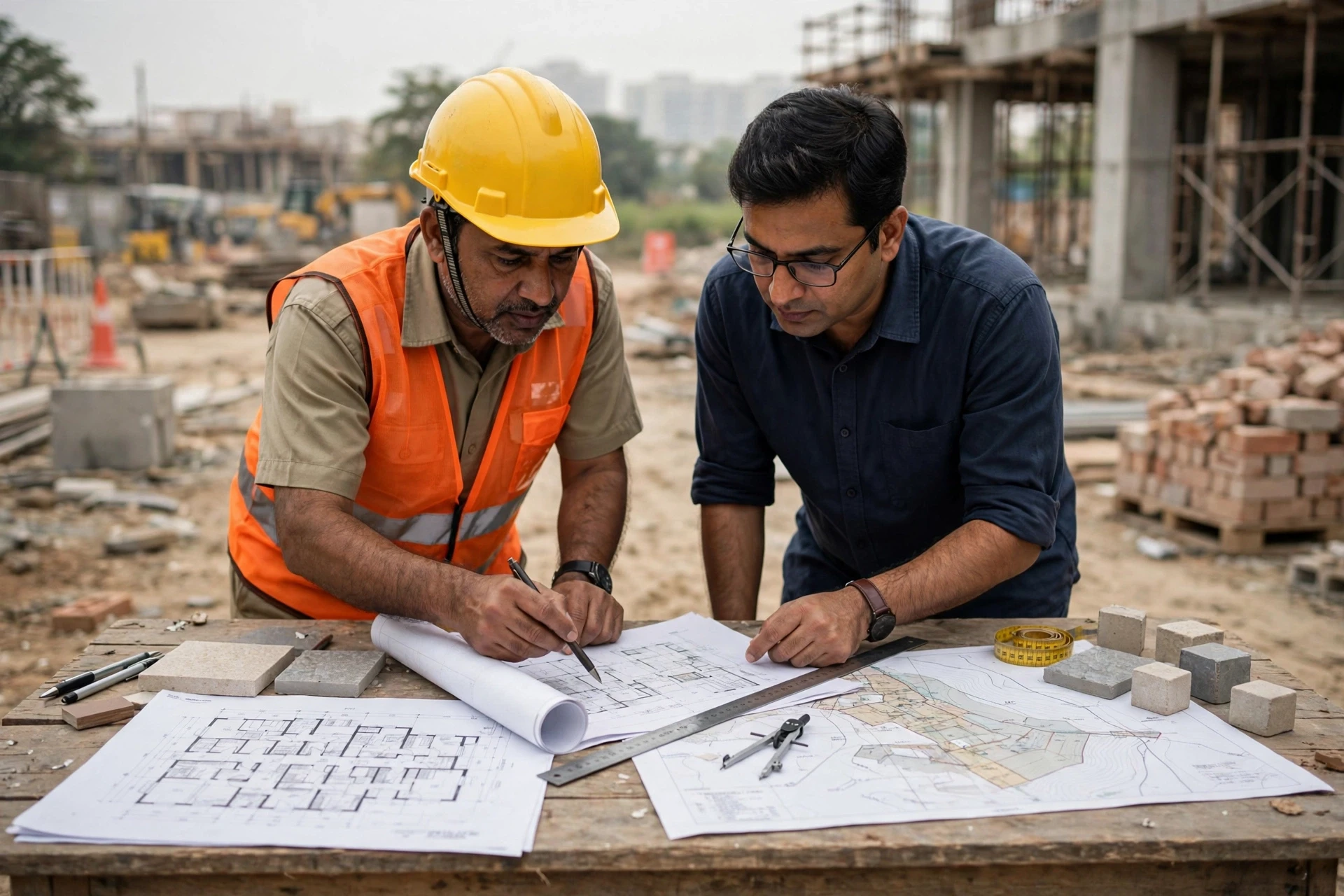
A collaboration agreement, often called a joint development agreement Gurgaon plot owners sign, is the document that decides who holds what if the deal goes well or goes badly. Write it for the bad year, not the good one.
Define land, scope, allocation and construction specification
Start with the land itself. Attach the title documents, the plot survey, and an exact description of what you are giving the builder. Then fix the division: which floors or units come to you, how the built-up and carpet areas are measured, and what specification the builder must deliver. A vague phrase like “luxury finishes” protects nobody. List materials, brands or standards by name.

Limit possession, power of attorney and encumbrance rights
Most collaboration deals run on a power of attorney, so read it slowly. It should be specific, not general: limited to approvals, construction and sale of the builder’s share. Your share should stay out of it. Insist that the property is not mortgaged or sold without your written consent, and that the agreement records when you get possession of your units. If a builder resists these limits, treat that as information about the builder.
Set default, reporting, dispute and exit mechanics
Ask what happens if the builder stalls. The agreement should set construction milestones, a reporting schedule, and a clear remedy if timelines slip, including termination and the right to complete or reassign the work. Cover dispute resolution and who pays legal costs. A builder who does these deals regularly will not flinch at exit clauses. We put them in our own agreements, because a plot owner who feels trapped never recommends anyone.
Who Handles Gurgaon Approvals, Licences and RERA Compliance?
Map each approval to the responsible party
In a Gurgaon collaboration, approvals rarely sit with one side. Land documentation stays with you, the owner. The building plan sanction, the collaboration licence under the Haryana license regime, structural drawings and occupancy certificate should sit squarely with the builder, because the builder executes the project.
Your job is not to do these tasks. Your job is to put each one in writing. The agreement should name who files what, who pays the fees and who bears penalties for delay. Any builder who resists that clarity is telling you something before you sign.
Check RERA status and the party named in authority records
Every collaboration project above the statutory threshold must be registered with HRERA Gurugram before marketing or sale. Verify the registration online and read who the authority names as promoter: the builder alone, or the builder with the landowner. That naming affects who answers to buyers if things go wrong.
Also confirm the approved building plan matches what the builder actually proposes, floor count and setbacks included.
Deviations from sanctioned plans are the most common source of stalled occupancy certificates in Gurugram, so ask for a written commitment that all construction stays within approval. A builder confident in its drawings, the way we are at Homezop, will put that in the agreement without hesitation.
How Do You Protect Your Share if Work Slows or Stops?
Test the builder’s capacity before granting rights
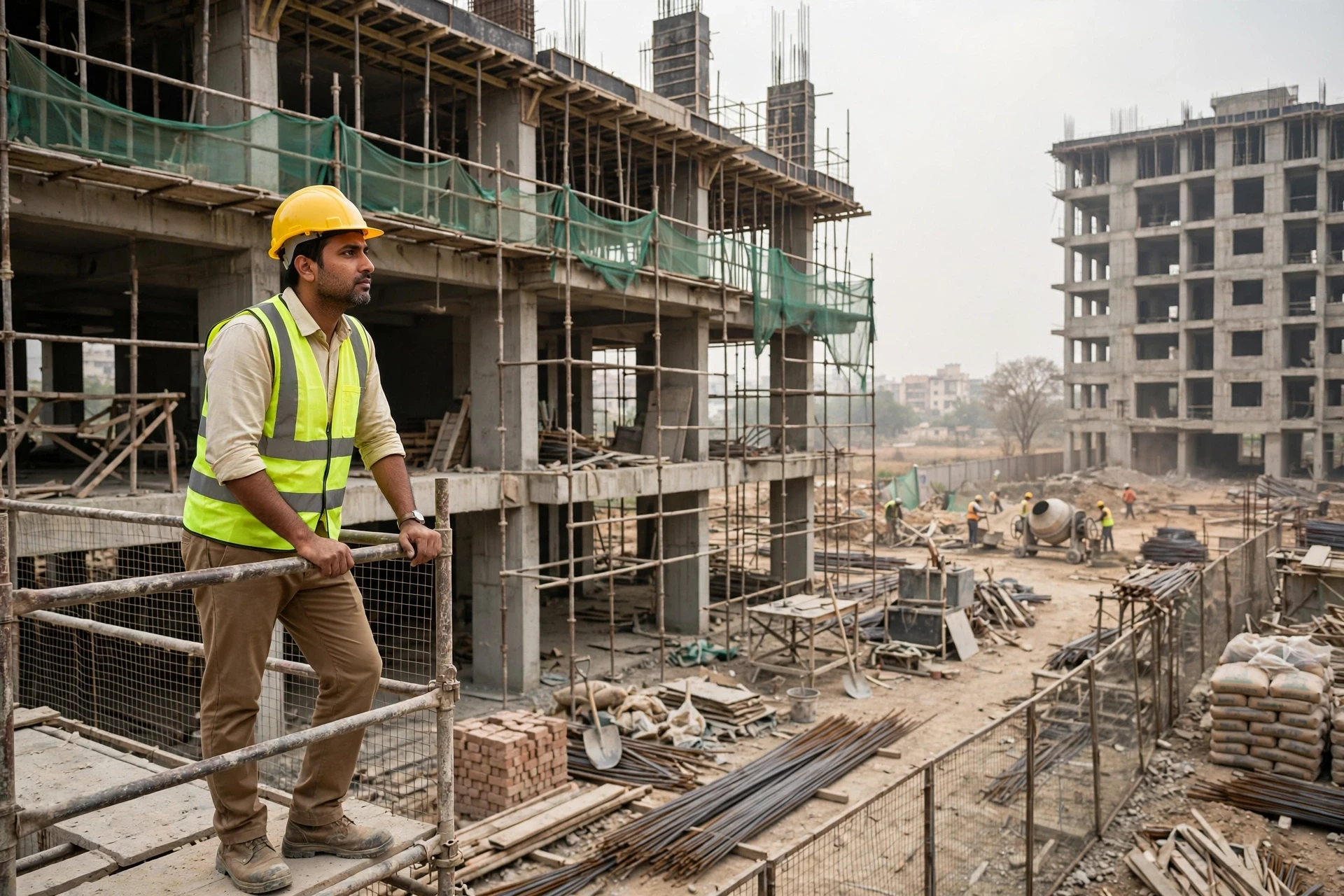
The best protection is choosing well. Before you hand over development rights, ask any builder, including us, for evidence of funded projects and completed handovers. Visit a live site. Speak to owners who have already received their floors. Ask who finances the construction and whether the funds are committed or promised. A builder who resists these questions is telling you something. Capacity on paper means little; a half-finished tower in another sector tells you more.
Agree the response to delay, insolvency or default
Then write the consequences into the collaboration agreement. A vague “timely completion” clause protects nobody. The agreement should define what counts as delay, what grace period applies, and what happens next. Cover at least these points:
- A defined cure period after a missed milestone, after which penalties or exit rights begin
- Your right to terminate and revert the land and approvals if the builder stalls beyond [VERIFY: cure period]
- A step-in right, allowing you or a replacement builder to complete the work
- Clear treatment of your share if the builder enters insolvency, since secured and registered rights stand differently from verbal promises
Push back on anything that relies on the builder’s goodwill. Goodwill slows when cash does.
What Should Owners Confirm About Timeline, Tax and Transaction Costs?
Make the timeline measurable and dependency-aware
Ask the builder for a written schedule, not a promise. It should show licence and approval dates, the start of construction, floor-wise milestones and the date your share is registered in your name. Every stage should carry a [VERIFY: mutually agreed duration] and a defined remedy if it slips. Two points matter most. First, delays cascade, so a late licence pushes back everything after it. Second, confirm who bears the cost of delay, because in our deals the builder carries that risk, not the owner. Push back on any schedule that has no dates attached.
Get written advice on tax, stamp duty and registration
A collaboration deal has tax consequences for you, and they arrive whether or not the builder mentions them. The handover of your floors can trigger capital gains treatment, and stamp duty and registration charges apply to your share at [VERIFY: prevailing Haryana rates]. GST treatment on development arrangements also needs checking for your specific structure. Do not rely on the builder’s word for any of this. Engage your own chartered accountant, get a written note on the deal structure you are signing, and have the agreement reviewed against it before you sign anything.
If you own a plot in Gurgaon and want clarity on a collaboration deal, talk to us at Homezop. We walk you through terms, approvals and safeguards, then arrange a private site visit at your pace.
Frequently Asked Questions
Q1: What should a plot owner expect in a builder collaboration agreement in Gurgaon?
Written shares, timelines, approval responsibility, delays remedies and security for your floor. Ask for every promise in writing.
Q2: How is the profit share decided between a plot owner and a builder in Gurgaon?
It depends on land value, built-up area and market rates. Ratios vary, so get the basis documented.
Q3: What are the stamp duty and registration costs for plot collaboration in Gurgaon?
They depend on the agreement structure and circle rates. [VERIFY: current Haryana rates] Ask a lawyer.
Q4: Who handles building plan approvals in a Gurgaon plot collaboration deal?
Usually the builder, but confirm in writing who bears cost, delay and penalty.
Q5: Can a plot owner exit or sell their share in a builder collaboration in Gurgaon?
Yes, if the agreement allows it. Negotiate exit and resale rights before signing.
Q6: Is builder collaboration better than turnkey construction for a Gurgaon plot?
Collaboration shares upside but adds counterparty risk. Turnkey costs more upfront, keeps control simpler.
Q7: What documents should a plot owner review before signing a collaboration agreement in Gurgaon?
Title deed, sanctioned plans, licence, RERA registration, bank guarantees and the draft agreement.
Q8: How do banks treat loans and mortgages on a plot under builder collaboration in Gurgaon?
Existing mortgages must be disclosed and released before transfer. Lenders assess the builder’s credentials too.
Questions to Resolve Before You Sign
A joint development works when the paperwork matches the promise. Fix your share and its security in writing, confirm who obtains each licence and approval, and attach real remedies if the builder stalls. Keep the agreement’s payment triggers tied to construction stages, not dates alone, and get the tax position checked by your own chartered accountant before anything is signed. [VERIFY: prevailing share ratios and tax treatment]
Push back early. Any builder doing these deals regularly, including us at Homezop, should answer these questions without hesitation. If answers arrive slowly, treat that as information too. Your plot is the leverage in this arrangement; the agreement is where it either stays protected or quietly slips away.
Ask for a private conversation or a site visit when you are ready.