

Quick Summary: Shortlisting premium independent floor developers in Gurugram should start with paperwork, not finishes: verify the project’s HRERA registration, promoter entity, sanctioned plans, and a 30-year title chain before any site visit. Compare carpet area against super area, since super area quotes can hide 20-30% less usable space, and run total five-year ownership costs including stamp duty, interiors, and maintenance. Homezop, which builds luxury independent floors in Gurugram, says it shares full specification sheets before negotiation and applies founder-level site reviews, and it recommends walking away from any project with no HRERA record or evasive answers.
Two premium independent floors in the same Gurugram sector can look identical in a brochure yet sit on very different ground. One may carry clean freehold title and full approvals; the other may rest on contested land, a weak licence or sale terms that quietly dilute your ownership. Finishes hide none of this.
So the shortlist must start with evidence, not marble samples. This guide gives you a buyer-side workflow: how to test a builder against RERA records, title documents, actual construction quality and the real economics of a floor purchase in the Rs 4-10 crore range.
We build luxury independent floors in Gurugram ourselves, so we know where presentations paper over gaps. The same test applies whether you are comparing premium independent floors, larger Gurugram luxury villas or boutique independent floor projects from private floor developers. Judge each one the same way, and the weak ones drop out quickly.
Step 1: Define the shortlist around the exact project and promoter
Most buyers start with the developer’s name. Start with the project instead. A premium independent floor is only as sound as the specific project’s approvals, the promoter entity behind it, and the land it sits on. Reputation attaches to names; risk attaches to paperwork.
What information should every developer provide first?
Ask for five things in writing before any site visit. First, the RERA registration number for that exact floor project, which you can verify on the Haryana RERA portal. Second, the promoter entity’s name, which is rarely the brand name on the brochure. Third, land ownership documents: the sale deed or composite holding showing the builder owns the plot. Fourth, sanctioned building plans from the relevant authority in Gurugram. Fifth, the floor-wise layout with carpet area, sale area and your undivided share of land stated in numbers.
Any hesitation on these five is your first shortlist filter. A serious builder of premium independent floors sends them the same day.
How do you compare developers without relying on brand familiarity?
Build a simple scorecard and fill it per project, not per brand. Weight land share, carpet-to-sale-area ratio, construction specification, RERA and approval status, and stage of construction. Compare documents, not brochures.
Then check delivery evidence on the ground: visit a completed floor from a previous project, not just the sample. If you are mapping options across the city, our overview of builder floor properties in Gurgaon shows what finished quality should look like before you commit.
Two projects can carry the same brand weight yet sit far apart on paper. The scorecard tells you which.
Step 2: Verify the project record and its legal land trail
A polished brochure is not a title. Before you fall for finishes, test the paper trail. Two checks matter most for a Rs 4-10 crore independent floor: the Haryana RERA entry and the underlying land record. Both are public, both are free, and both take less than an hour.
How do you check the Haryana RERA entry?
Ask the developer for the project’s HRERA registration number. Then search it yourself on the Haryana RERA project search portal. Gurugram projects sit under the Gurugram bench, so start there.
Once the record opens, read five things. First, the registered promoter name must match the entity you are paying. Second, check the approved plan and sanctioned number of floors. Third, read the completion timeline and quarterly progress updates; thin or missing updates say something. Fourth, scan the litigation disclosure. Fifth, confirm the bank account where 70% of buyer money must sit.
A floor advertised without its RERA number, or a number that returns no record, is a walk-away. You lose RERA’s dispute forum the moment you buy into an unregistered project.
Which land and title questions need a lawyer’s review?
RERA tells you what the developer claimed. It does not prove ownership. For that, hire an independent property lawyer who has done Gurugram work, not one the developer introduces.
Hand over the full file and ask for written answers on four points:
- Title chain: 30 years of sale deeds, with the seller’s title traced to the current promoter or landowner.
- Collaboration agreement: on builder floors, the developer often builds on someone else’s plot. Read the joint development agreement and check it is recorded in the revenue record (jamabandi).
- Licence and change of land use: the DTCP licence and CLU for the exact parcel, not the colony at large.
- Encumbrances: mortgages, court stays, acquisition notices, and whether the specific floor you buy will be registered freehold in your name with a defined land share.
How should you treat gaps, changes or lapsed records?
Records age. Registrations lapse, plans get revised, promoter entities change. None of these are fatal by themselves, but each demands a fresh document before you commit.
If the RERA entry shows an old completion date, ask whether an extension was filed and read the authority’s order. If the promoter entity changed, verify the new entity holds the licence and title. If progress updates stopped a year ago, visit the site and count floors yourself.
Treat any document the developer “will arrange later” as a red flag. Everything you need already exists in a public register somewhere.

Step 3: Reconcile the floor, area and construction promise with documents
A floor sold on super area can hide 20-30% less usable space than the brochure suggests. Before you compare prices across projects, pull the numbers out of the papers, not the marketing deck.
How do you compare carpet, covered and super area?
Ask for all three figures in writing. Carpet area is the usable floor inside the walls. Covered area adds walls, balconies and shafts. Super built-up area adds your share of lobbies and common space, which is the number brokers quote because it looks bigger. Divide price by carpet area and the real rate emerges. On a Rs 6 crore floor, a gap between 2,800 sq ft quoted and 2,000 sq ft usable changes the per-square-foot math by half. RERA rules require carpet area disclosure in the RERA agreement, so insist on that number first.
What proves the construction specification?
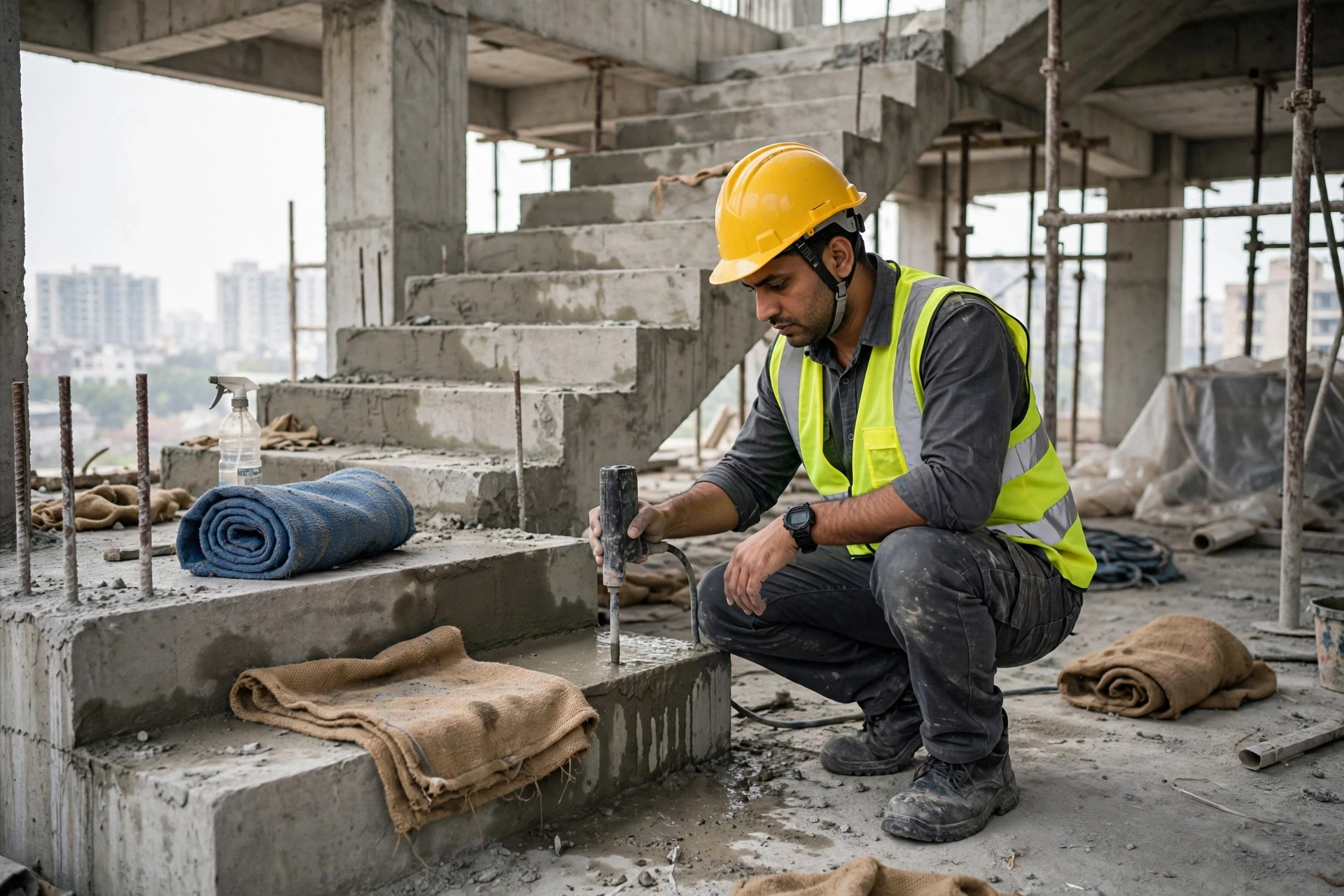
A word-of-mouth promise on structure or finish is worth little. Ask for the structural drawing, the soil test report and the sanctioned building plan from the municipal authority. Then check the material schedule: grade of steel and concrete, brick versus AAC block, waterproofing brand, and window and lift specifications. A credible builder will hand these over without prompting. At Homezop we share the full specification sheet before negotiation, because a buyer who knows what is inside the walls negotiates on value, not on fear. Walk the site at slab stage if you can; wet areas and column positions tell you more than any render.

Do the drawings and sale terms describe the same home?
Compare three documents line by line: the sanctioned plan, the agreement to sell and the floor layout you were shown. The unit number, floor plate, parking count and terrace rights must match across all of them. Discrepancies in the drawing versus the sale terms are the most common source of disputes in builder floor deals, so fix them before you pay anything. Our evaluation checklist covers this reconciliation step in detail.
Tip: Never rely on verbal assurances for area, materials or parking. Every claim should appear in a signed document with a penalty for deviation.
Step 4: Test delivery capability and day-to-day accountability
A developer can show you a beautiful brochure. That is not delivery. In this price band, you are buying a promise that spans two to four years of construction and several years of handover support, so test how the builder has behaved before and how they behave now.
What is useful evidence of past delivery?
Ask for three things: completed projects you can walk through, names of owners living in them, and the original possession dates against actual handover dates. Any developer with a track record can arrange a visit to an occupied floor in the same micro-market. Go without an appointment if possible, because a lobby that has been staged tells you less than a three-year-old building where the lift, water supply and facade have simply held up.
Check the project’s RERA record for complaints, delay orders and revised completion dates. This is public and takes twenty minutes. Then ask a harder question: who runs the day-to-day site? A promoter who visits his sites weekly will speak differently about waterproofing and curing than a developer who has delegated everything to a contractor. At Homezop, a founder-level review of every active site is standard practice, and we encourage buyers to speak with owners of past floors before they commit to anything.
What should the handover and maintenance plan specify?
Insist on a written handover pack: snag list with closure timelines, warranty terms for waterproofing and fittings, as-built drawings, and contact details for the team handling defects after possession. Ask who maintains the building after handover, for how long, and what the monthly cost per floor is. Vague answers here predict your first two years of ownership.
Step 5: Assess the micro-market and total ownership economics
A floor can be built well and still be a poor buy. Location does the long-term work: resale depth, rental demand and day-to-day living all trace back to the street you are on. So test the micro-market the way you would test any operating asset, then run the full cost, not just the headline price.
How do you test whether the location works in practice?
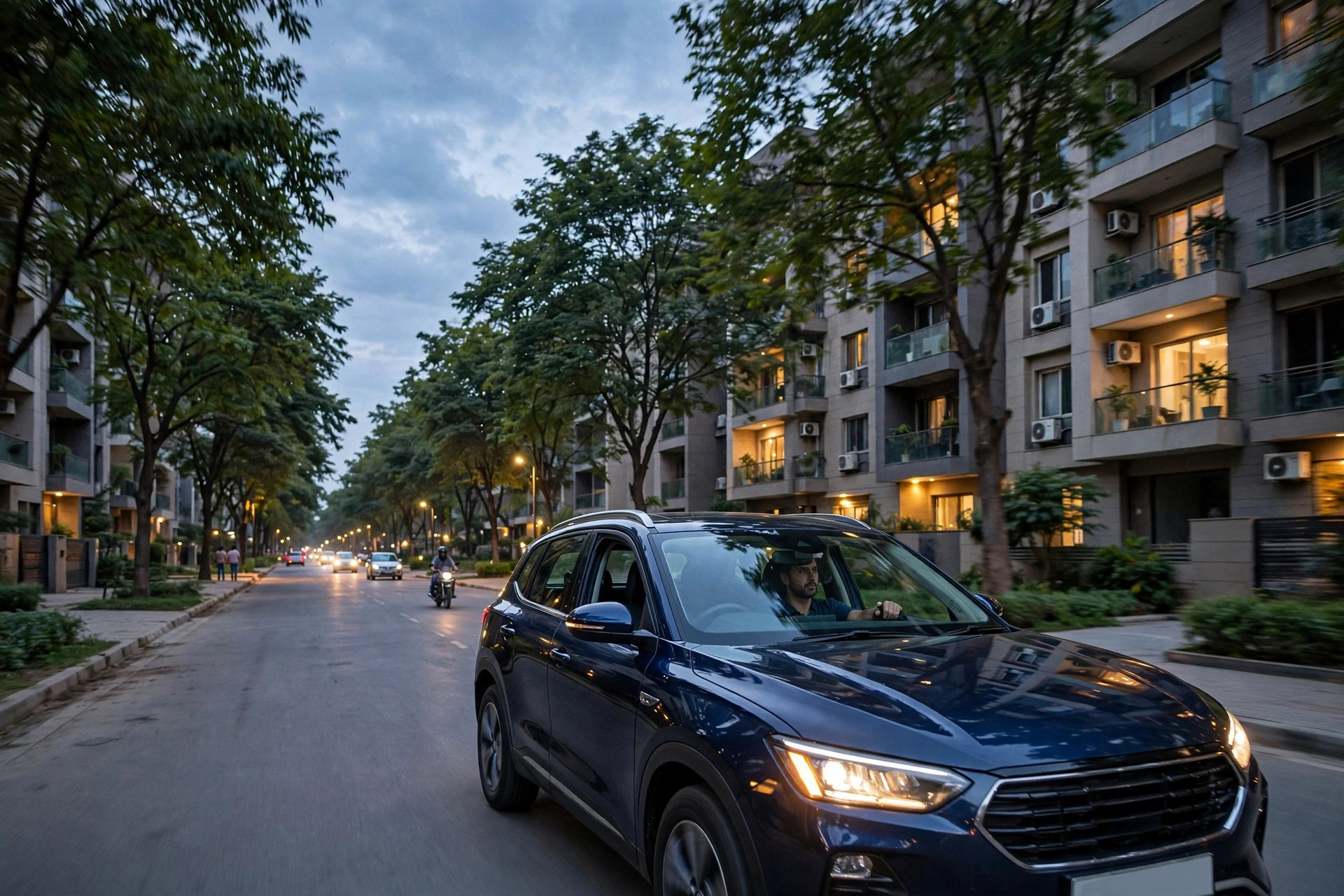
Visit at three times: a weekday 8-9 am, a weekday 6-8 pm, and a Sunday afternoon. Drive the approach road yourself. Note the width, waterlogging after rain, and how quickly you reach Golf Course Road, Dwarka Expressway or the nearest metro station.
Then check what surrounds the plot. Adjacent commercial activity, a school gate or an uncompleted project next door will shape noise, traffic and future views. Compare rental evidence on portals for the same sector and floor configuration, not city averages. And look at completed low-rise projects nearby: occupancy tells you whether families actually live here or units sit shut.
We shortlist micro-locations on this basis, and our notes on Gurgaon micro-locations cover the sectors we look at first.
What should the financial comparison include?
The quoted price is only the entry point. Compare floors on total ownership cost over five years.
| Cost line | What to check |
|---|---|
| Base price | Price per square yard of land share, not just carpet rate |
| Stamp duty and registration | Roughly 5-7% of circle rate or market value, whichever is higher |
| Interiors and fit-out | Commonly Rs 2,000-4,000 per sq ft depending on finish level |
| Maintenance | Monthly charge and whether a lift, DG backup and security are included |
| Exit math | Recent resale evidence in the same sector, plus realistic rent yield of 2-3% |
Ask the developer for a written breakdown with no contingencies. A builder who hesitates at that request has answered a bigger question about how the relationship will work after possession.
Step 6: Rank the evidence, resolve red flags and decide who advances
Which issues should stop a project from advancing?
Some findings end the discussion, no matter how good the site visit felt. Walk away if:
- The project has no HRERA registration, or the licence, sanctioned plans and sanctioned floor count do not match what is being sold.
- The land title shows pending litigation, unresolved succession claims or an unregistered collaboration agreement between landowner and developer.
- The developer refuses a written bank-guaranteed construction schedule or has no completed, occupied project you can inspect.
- Carpet area, land share or freehold terms in the draft agreement differ from the sales pitch.
- Dues to authorities, or occupancy certificate gaps, appear on any completed phase.
A single missing document can be cured. A pattern of evasive answers cannot.
How should the final shortlist be recorded?
Put each surviving developer on one page. Score five columns: title and RERA compliance, structural spec, construction progress against schedule, ownership economics, and after-sales conduct. Weight title and spec heaviest; a beautiful floor on disputed land is worth nothing.
Note what each developer answered slowly or reluctantly. That hesitation is data. Where two score similarly, visit both sites again on a working day, unannounced, and count actual workers.
Rank three to four names, then arrange private site visits. Ask for the founder or project head on site, not a sales counter. The people who answer technical questions directly are the people who will build your home.

Shortlisting developers on paper only gets you so far. At some point you need to stand on the floor, check the finishes and read the ownership papers. If that fits where you are, visit a Homezop site in Gurugram, or speak with me directly about how we build and what we hand over.
Frequently Asked Questions
Q1: Which top developers build premium independent floors?
Gurugram has several established names, but the list matters less than the test: RERA registration, clean title, land share in the conveyance deed, and build quality you can inspect on an active site.
Q2: What makes Homezop’s independent floors in Gurugram better than other builders?
Significant land share, full-floor villa-like layouts, and specification decisions a founder signs off on. Ask any builder to show both the deed and the site, not the brochure.
Q3: How do I verify the land legality of Homezop’s premium independent floors?
Check the RERA number on the official portal, read the conveyance deed for your land share, and request the licensed colony’s completion documentation.
Q4: Which Gurugram micro-locations does Homezop specialize in for independent floors?
Established, low-density sectors near Golf Course Road and Nirvana Country, where infrastructure, resale depth and rental demand are proven.
Q5: What carpet area should I expect in a Rs 4-10 crore floor?
Typically 2,500-4,000 sq ft carpet, though super area quotes run 20-30% higher. Always compare carpet, not super.
Q6: Should I buy at launch or closer to possession?
At launch you price in construction risk. Near possession, you pay for certainty. Walk an active site; its condition tells you which discount is real.
A Clearer Shortlist
A shortlist built on evidence beats one built on presentation. Check the RERA record and title chain before you trust a brochure. Visit the site at least twice, once mid-construction, and ask for the concrete grade, structural drawings and specifications in writing. Then run the ownership math: land share, carpet area against super area, and realistic rental yield in that micro-market.
Reputation tells you where to start looking. Records and site evidence tell you whether to sign. Apply this workflow to every developer the same way, and two or three names will separate themselves quickly. When you are ready to see what a fully verified floor looks like, our guide to builder floors in Gurgaon for private luxury living is a useful benchmark.