

Quick Summary: In Gurgaon, freehold means you own the land and structure outright, while leasehold gives you occupancy rights for a fixed term under a lessor. The article argues the label on a listing means little; what counts is the sale deed, title chain, and jamabandi records, especially the undivided land share written into a builder floor’s conveyance deed. For a Rs 4-10 crore home, freehold is usually the safer pick because loans, resale, and succession move without a lessor’s sign-off, though Haryana does allow leasehold-to-freehold conversion in some cases. Homezop builds freehold luxury floors in Gurugram with a defined land share recorded in every deed.
Ask any buyer about freehold vs leasehold Gurgaon and you will hear a simple answer: freehold is better. That answer hides more than it reveals. At Rs 4-10 crore, what matters is not the label but what the registered documents convey: the land, a defined floor, an undivided share, or a time-limited lease interest.
We build independent floors in Gurugram, so we read title chains for a living. Two homes in Sector 57 can carry very different rights depending on land category, approvals, and the exact wording of transfer. The freehold property Haryana picture, leasehold to freehold conversion, and lending and succession all follow from those papers. Wondering is my Gurgaon property freehold? This comparison shows how to find out, and what to ask a lawyer before you commit.
Freehold vs Leasehold in Gurgaon: At a Glance
| Freehold ownership | Leasehold ownership | |
|---|---|---|
| Nature of interest | Ownership interest in the property described in the conveyance | Lease-based rights governed by the lease or allotment documents |
| Land rights | Depends on the deed; may include plot ownership or a defined undivided share | Rights are limited to those granted by the lessor and lease documents |
| Term | No fixed lease expiry stated for the freehold interest | Defined by the underlying lease; verify term and renewal language |
| Transfer and succession | Subject to valid title, registration, applicable law, and any governing property documents | May require compliance with lease terms and applicable permissions or procedures |
| Loan and resale checks | Lender and buyer still assess title, approvals, construction, and encumbrances | Lender and buyer assess remaining term, transfer conditions, title, and approvals |
How Freehold ownership and Leasehold ownership Compare
The freehold vs leasehold Gurgaon question comes down to what the registered deed actually conveys. Here is each side, stated plainly.
Freehold ownership
Freehold means ownership held without a fixed lease term, subject to clear title and the registered instruments. It suits buyers who want land rights defined by the deed, whether plot ownership or an undivided share. In Gurgaon builder floors, this is the tenure most families and investors look for first.
Key strengths
- No fixed lease expiry on the ownership interest
- Land rights per the deed, including possible undivided share
- Transfer and succession follow normal title and registration checks
Leasehold ownership
Leasehold is a right to occupy or use property for a defined period under a lease or allotment arrangement. The rights are only those the lessor grants, so the lease documents govern everything. Buyers should verify the term, renewal language, and any transfer permissions before committing.
Key strengths
- Defined term with clear renewal language to verify
- Rights spelled out in lease or allotment documents
- Common in certain Gurgaon land categories, so worth understanding
What Do Freehold and Leasehold Mean for a Gurgaon Buyer?
When people type freehold vs leasehold Gurgaon into a search bar, they usually want one answer: what do I actually get for my money? The short version. Freehold means you own the land and the structure on it, outright and in perpetuity. Leasehold means the land belongs to a government authority, and you hold the right to occupy and use the property for a fixed term, paying the lease amount as agreed.
That difference shapes everything downstream. It affects your land share, how banks treat your loan application, how you resell, and how the property passes to your children.
Why the Word on a Listing Is Not Enough
Listings use these terms loosely. A project marketed as freehold may sit on land with unresolved status, and a leasehold plot may still be an excellent, bankable asset. The label on the ad tells you very little.
What matters is the title documents: the sale deed, the chain of title, and the land record entries. Read those, not the brochure. A builder who is confident about tenure will hand over the document trail without hesitation.

When we plan independent floors, tenure clarity is the starting point of the design conversation, not an afterthought.
What Does a Builder-Floor Buyer Actually Own?
Land Share, Common Areas, and the Floor Itself
On a builder floor, your ownership has three layers. First is the floor itself: your defined area within the building, with exclusive rights over that space. Second is your undivided share of the land beneath it, recorded in your sale deed. Third is a share of common areas, typically the staircase, passage and any shared open space.
The land share matters most at resale. On a typical low-rise plot in Gurgaon, a ground-floor owner may hold a larger land share than an upper-floor owner, though this varies by project structure. Check the exact percentage in the conveyance deed, not the marketing brochure.
With a villa, you own the plot and the structure outright. With an apartment, ownership usually sits within a society under the Haryana Apartment Ownership framework, and your land share is proportionate. A builder floor sits between the two: you hold a distinct floor plus a defined land share.
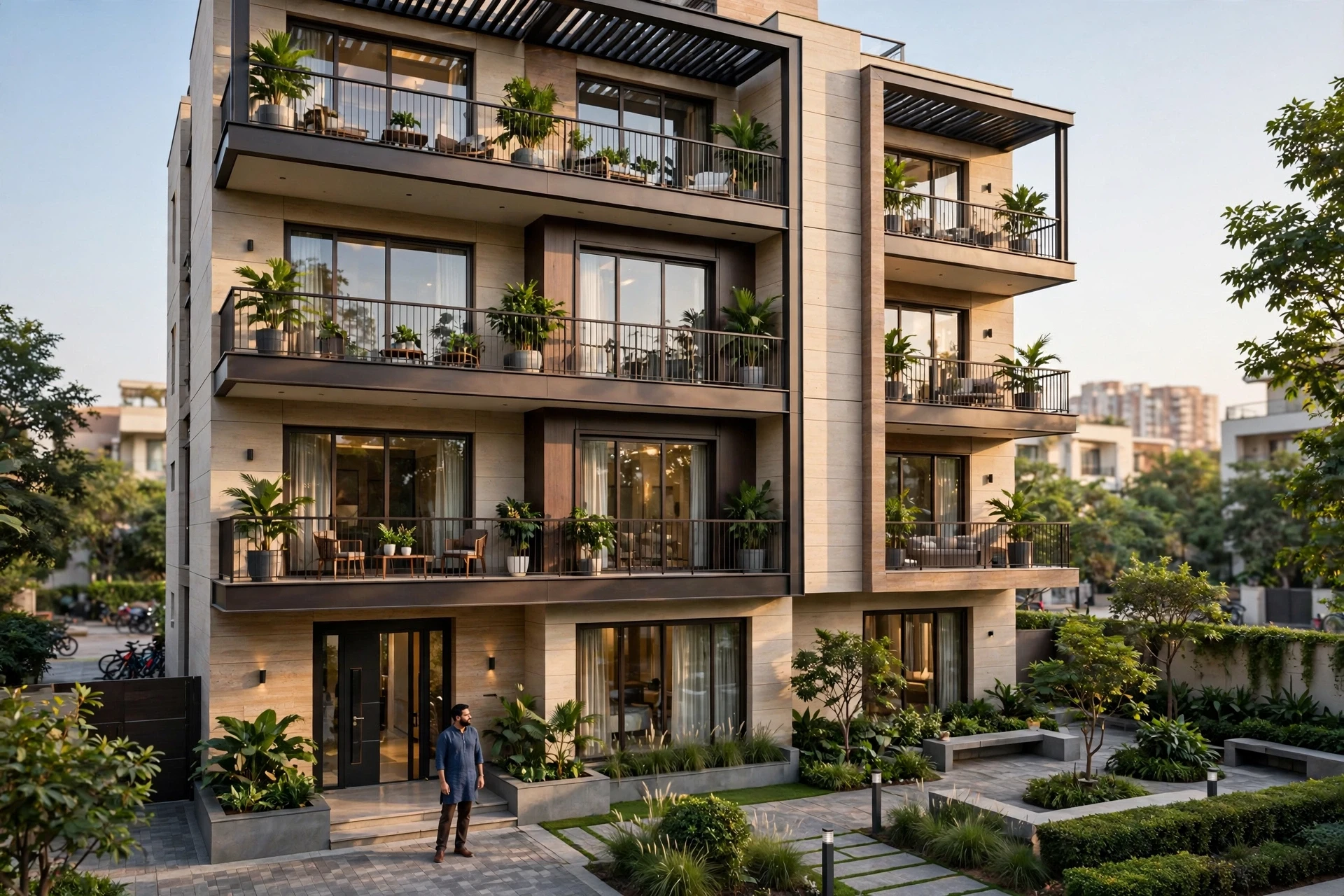
When we build independent floors in Gurugram, the land share is written into every deed. You can see how we structure our builder floors in Gurgaon to preserve it.
How Do Tenure, Land Category, and Documents Fit Together?
A Practical Document Sequence
Tenure, land category and paperwork are not three separate topics. They are one story told across a stack of documents, and the stack tells you what you actually own in Gurgaon.
Start with the title deed of the plot or the parent land parcel. It shows who holds the land and on what basis. Then read the sale deed or conveyance deed for your unit. This is where your share of the land is written down, or left out. Next, check the jamabandi and the khasra records at the tehsil to see the land’s revenue category. Finally, ask for the sanctioned building plan and the [VERIFY: authority that issued completion or occupation documents] before you accept possession.
A quick way to read the trail:
| Document | What it tells you |
|---|---|
| Title deed | Who owns the land, and whether it is freehold or leasehold |
| Conveyance deed | Your named share of the land |
| Jamabandi / revenue records | Land category and any restrictions |
| Sanctioned plan and completion papers | What was legally built |
If any link in this chain is missing, the property is cheaper for a reason. On our own builder floors, we hand over the full document set before you commit, so you can verify each page yourself.
How Do Loans, Resale, Transfer, and Succession Differ?
Freehold property is simpler at every step. Banks lend against it willingly, buyers trust it, and heirs inherit it without a lessor’s sign-off. Leasehold adds friction: lenders may fund it, but only after checking the lease term and the lessor’s consent terms. Transfer and resale can require permission or a fee. Succession works, yet your heirs inherit the remaining lease, not the land itself.

What to Ask the Lender and Seller
Before you commit, ask the bank four things: does it fund this tenure type on this land category, what loan-to-value will it offer, does the lease term comfortably outlast the loan, and is any lessor approval needed at disbursal? Then ask the seller or developer whether the title is freehold or leasehold, and request the due diligence trail: sale deed, lease or conveyance deed, and [VERIFY: mutation record with the relevant authority] showing the property in the seller’s name.
If the status is unclear, a clear [VERIFY: title search by an independent lawyer] settles it before money moves.
Can Leasehold Property in Haryana Be Converted to Freehold?
In many cases, yes. Haryana has run conversion schemes before, and leasehold plots or floors in some Gurgaon areas can move to freehold title. But the answer changes by land category, the original allotment terms and the scheme in force at the time.
Three things decide whether a conversion is possible for your property:
- Who holds the lease: the authority that issued it, and under which scheme.
- [VERIFY: applicable land categories and eligibility conditions under the current Haryana conversion scheme]
- [VERIFY: current conversion fee or charge, and how it is calculated]
[VERIFY: process, documents required, and typical timeline through the relevant Haryana authority]
Two cautions. Conversion is not automatic, and pending applications can sit for months. Also, some leasehold properties in Gurgaon were never eligible and cannot become eligible by paying a fee.
Before you price a conversion into your purchase, get written confirmation from the issuing authority. Verbal assurance from a seller means nothing.
If you would rather skip the question entirely, freehold builder floors in Gurgaon avoid it at the outset.
Which Should You Choose: Freehold or Leasehold in Gurgaon?
For a Rs 4-10 crore home in Gurgaon, freehold is usually the safer call. You own the land outright, so resale, bank loans and succession all move smoothly. Leasehold can work if the price reflects it and the remaining lease is long, but every sale and transfer runs through the lessor first.
Check the documents before you decide, not after. If you want the full buyer’s checklist, our guide to builder floors in Gurgaon covers what to verify.
The honest answer: most luxury buyers in Gurugram should shortlist freehold first, then examine leasehold only with a lawyer and a calculator open.

If the paperwork behind a Rs 4-10 crore home still feels unclear, talk to us directly. Homezop builds freehold luxury floors with real land share. Start at Homezop or request a private site visit.
Frequently Asked Questions
Q1: What does freehold ownership actually mean for a Gurgaon homebuyer?
You own the land and structure outright, with full transfer and succession rights.
Q2: Is a leasehold property in Gurgaon safe to buy for long-term use?
Usually yes, but verify the lease term, lessor and transfer conditions first.
Q3: Can leasehold property in Haryana be converted to freehold?
Sometimes. Conversion rules, fees and eligibility vary. [VERIFY: Haryana conversion policy]
Q4: How do banks in India treat home loans on leasehold versus freehold?
Freehold gets easier approval; leasehold depends on unexpired lease term. [VERIFY: lender criteria]
Q5: What happens to a Gurgaon flat when the 99-year lease expires?
Rights revert to the lessor unless renewal terms apply. [VERIFY: renewal process]
Q6: Do independent floors in Gurgaon come with freehold land share?
Many do, but confirm via the title deed, not the brochure.
Q7: Which gives better resale value in Gurgaon, freehold or leasehold?
Freehold generally attracts wider buyers and cleaner financing.
Q8: What documents should I check before buying a leasehold property?
Lease deed, title chain, encumbrance certificate and transfer permissions.
A Clearer Ownership Decision
In Gurgaon, what you own comes down to one line in the documents: freehold means you hold the land and the floor outright. Leasehold means the land is held from a lessor for a stated term, so check what remains and what renewal involves.
For a builder floor, insist on a defined land share, a clean title chain and registered transfer papers. Verify every clause, fee and authority with a [VERIFY] placeholder before you sign.
If you want a floor built on genuinely clear land title, see our builder floors in Gurgaon first.