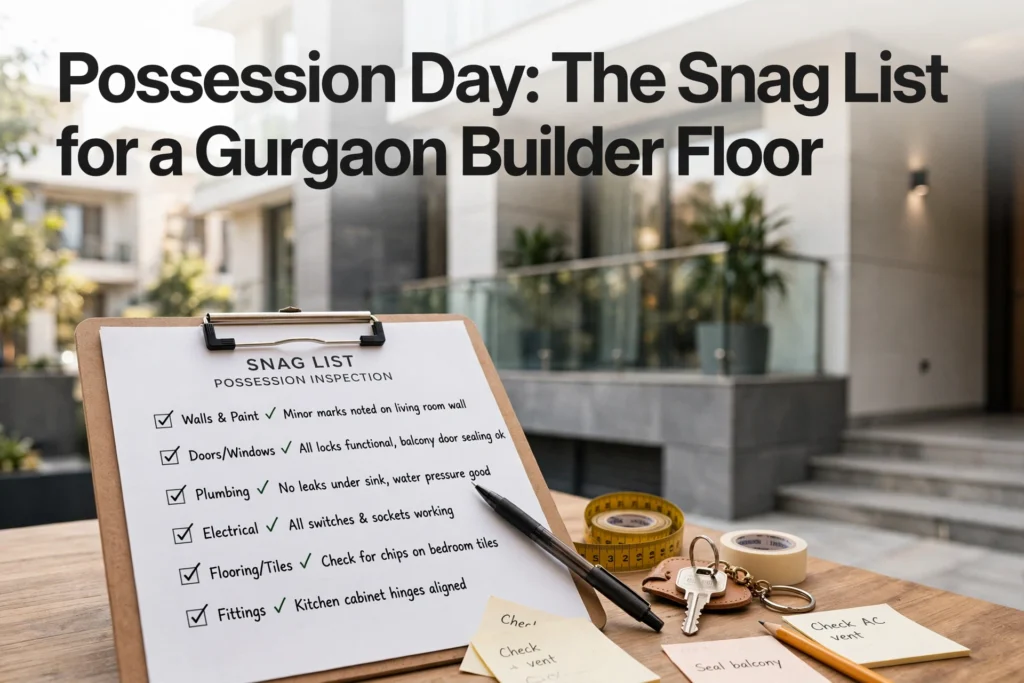

Quick Summary: On possession day for a Gurgaon builder floor, test the things that actually fail: run every tap and check that bathroom and balcony floors slope to the drain, not the door, and plug a socket tester into each point to catch dead sockets and missing earth. Log each defect with an ID, photo and date, then hold your final instalment until the snags close, since that payment is your only real leverage. Collect the Occupancy Certificate, registered sale deed, approved plans and meter transfers before you accept keys, because possession without an OC is a red flag. Homezop hands over a printed snag-and-documents register and closes the snag list before releasing payment.
On possession day in Gurgaon, a bathroom drain that holds water or a terrace outlet that backs up matters more than the polished entrance lobby. This builder floor possession checklist exists so you walk the floor with a written sequence, test what can be tested, and record every unfinished item before you sign.
A snag list for new home India buyers trust is not a formality. It is your leverage: payment stays withheld against open snags until they close. I have handed over homes across Gurugram, so what follows is a practical home handover checklist Gurgaon buyers can print and carry to site. Use it as your builder floor handover record, covering what to check at possession, room by room and document by document.
Before You Start: Set Up a Repeatable Walkthrough
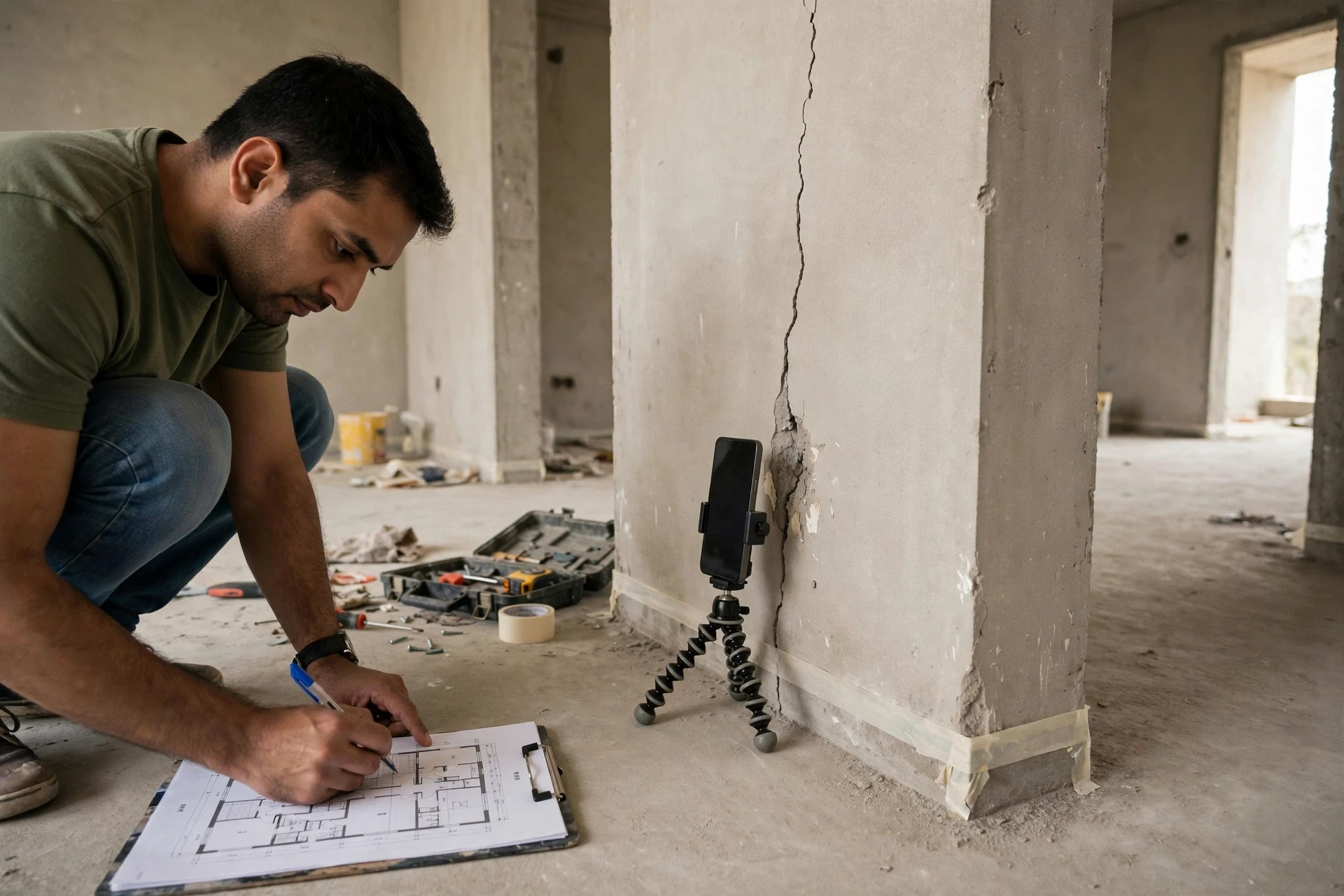
A snag list only works if every entry is specific and traceable. “Bathroom floor slopes” tells nobody anything. “Master bathroom, slope runs toward the door, not the drain, roughly 3 mm over the tile width” gets fixed on the first visit.
So number every room, zone each system, and give each snag an ID: B2-04 means bathroom 2, item 4. Log it on paper and on your phone the same day, with a photo and a short video. Note who acknowledged it and the promised date. That record becomes your payment lever, because you can hold the final instalment against open items until they close. This habit is the backbone of any builder floor possession checklist and the practical core of a snag list for new home India buyers can actually use.
What Should You Check Inside Each Room?
Walk every room with your builder floor possession checklist in hand, and treat this as the residential half of your snag list for new home india searches. Test, photograph, note. Move on.
Bedrooms, Living Areas and Joinery
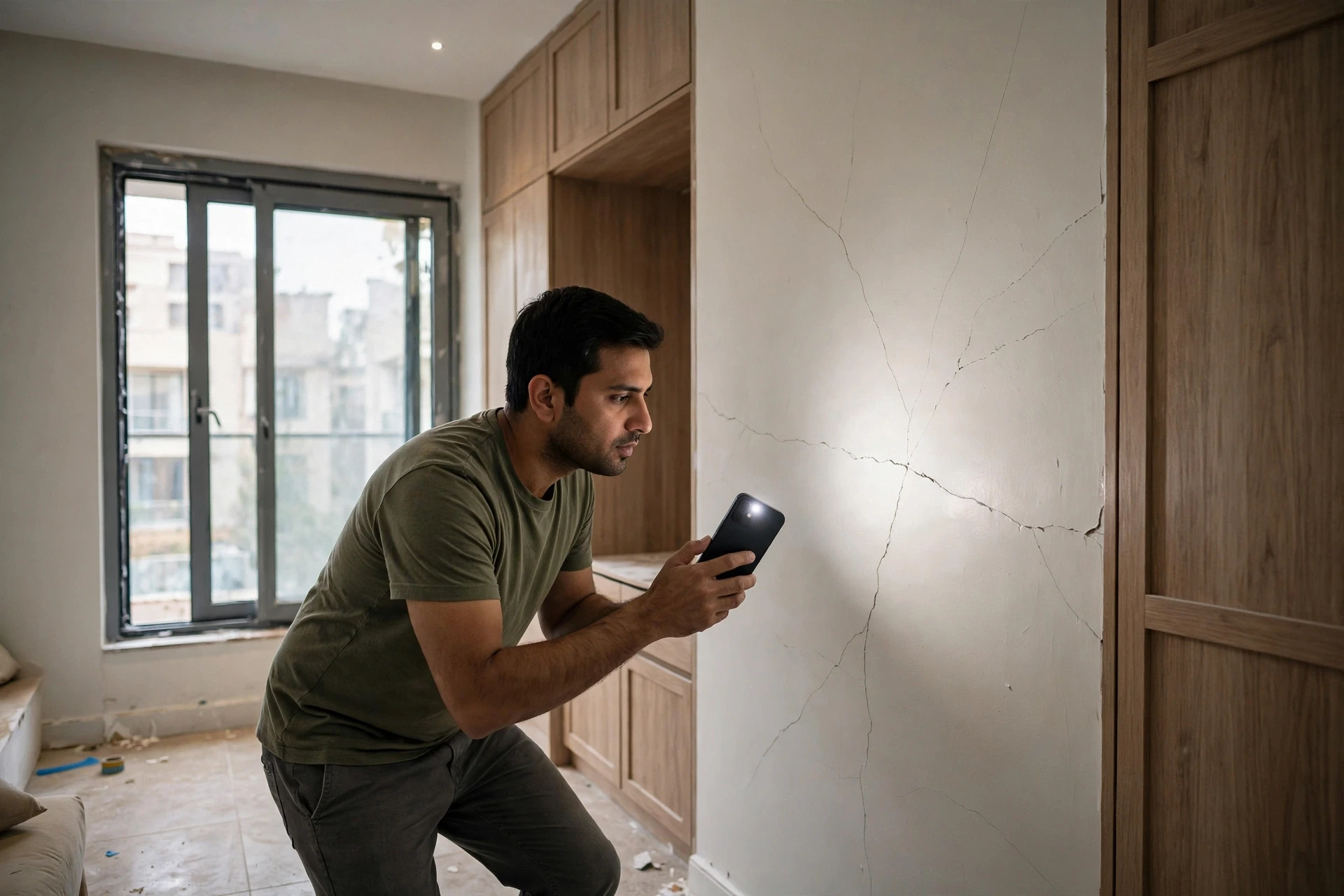
Start with the walls and ceilings. Rake a phone torch across them at an angle; shadows reveal hairline cracks, hollow patches and poor paint prep that flat daylight hides.
Check every door. It should close on its own weight, latch cleanly and sit square in its frame. Wardrobes and other joinery deserve the same test: open every shutter, run your finger along the edges and confirm the hardware is what the spec sheet promised.
Then the windows. Slide or swing each one fully. Look for scratches on the glass, gaps in the sealing and smooth track movement. Press a corner of the flooring with your heel; hollow-sounding tiles mean poor bedding and a future pop.
Bathrooms, Kitchen and Balconies
Bathrooms fail on water, so test water first. Run every tap at full pressure, flush twice and watch the floor: water should reach the drain without pooling at your feet. Check the slope with a bucket of water, and look under and behind the WC and wash basin for seepage marks.
The kitchen needs the same discipline. Confirm the drain points, counter level and points for the hood and appliances match the drawings.
Balconies are the quiet risk. Pour water on the floor and confirm it flows outward to the spout, not toward the door. Check the railing for wobble and the drain for blockage. Log each defect with a photo and a location tag before you leave the room.
A well-finished independent floor in Gurgaon should pass these tests without excuses.
How Do You Test Electrical, Plumbing and Building Services?
Bring a socket tester, a small level and a bucket. Twenty minutes per floor now saves months of callbacks later.
Electrical Points, Earthing and Power
Plug a socket tester into every point. It flags dead sockets, reversed polarity and missing earth in seconds. Ask for the MCB schedule and check each circuit trips at its board. Run heavy loads together: geyser, AC and microwave on at once. Lights should hold steady with no flicker. Press each switch twice; loose fittings show up immediately. Check the earthing at the main panel and confirm an [VERIFY: earthing resistance figure or standard] was tested, not just assumed. Outside, every outdoor socket and terrace point needs weatherproof covers.
Water Pressure, Drainage and Lift Commissioning
Open every tap fully and time the fill of a bucket. Low pressure at the top floor usually means a pump or tank issue. Flush each toilet twice and watch the drain clear. Then fill basins and shower trays, release them, and look for standing water; bathroom floors must slope to the drain, not away from it. Pour a bucket into balcony drains too. Run all taps together for ten minutes and check under sinks for weeping joints.
The lift is a shared system, so test it under load. Ride it with the family and luggage, check the door sensor with a hand, and confirm the [VERIFY: lift commissioning certificate] is current. Confirm the DG backup actually runs the lift and pumps, not just corridor lights.
What Must You Inspect Outside the Floor?
Terrace, Parking and Shared Areas
The terrace decides how the floor ages. Walk it after checking the slope: water must drain to the outlets, not pool around the parapet. Look for cracks in the waterproofing layer, open joints where the parapet meets the slab, and standing water in any low patch. Ask whether the outlet pipes are clear. A blocked terrace drain shows up as a ceiling leak two floors down, in someone else’s home.
Check the lift next. It should be commissioned, with a valid inspection certificate displayed, doors closing without a jolt, and level landing at each floor. Then look at the stilt and parking: marked bays, working lights, and drainage that does not flood in the first monsoon shower. Confirm which parking slot is legally yours in the sale documents, not just by builder’s word.
Shared areas matter on an independent floor because you own a share of them. Check the boundary wall, the gate, the intercom at the entrance, and the water tanks and pumps you will co-own. Note every defect, photograph it, and log it in the snag list before you sign possession.

Which Documents and Handover Items Should Change Hands?
Use a Received, Pending or Not Applicable Register
Treat paperwork like the snag list: three columns, one item per line, marked Received, Pending or NA. Nothing leaves the site until the register is complete.
Documents to collect:
- Occupancy Certificate (OC) and, where applicable, the completion certificate. Possession without an OC is a red flag.
- Allotment letter, final demand letter and payment receipts, matched to your agreement to sell.
- Sale deed or conveyance deed, registered and stamped, plus the original chain of title.
- [VERIFY: RERA registration details and any completion filing for the project]
- Approved building plan, structural drawings and electrical and plumbing layouts, ideally as PDFs on a pen drive.
- [VERIFY: Warranty and defect-liability documentation for waterproofing, structure and fittings]
- Electricity and water meters, with the latest bill in your name and account-transfer acknowledgements.
- Property tax receipts and [VERIFY: applicable tax clearance or dues certificate from the local authority].
- Lift AMC, test certificate and [VERIFY: commissioning report, if your floor has a lift].
- Keys to main door, terrace gate, parking, and meter boxes.
Items to physically hand over: site plan copy, watchman and maintenance contacts, and access cards if the colony gates on them.
Anything marked Pending gets a date. That is your leverage for the final payment.
On Homezop floors we hand over a printed snag-and-documents register at possession, so nothing rests on memory.
How Should You Close Snags and Handle the Final Payment?
Log every defect in writing the day you inspect: room, location, description, photo. Give the builder one consolidated list, not drip-feed emails. Agree a closing date for each item and set that date against the final payment.
In a builder floor, the last instalment is your only real leverage. Keep it withheld until the snags you marked are closed and you have walked the home again. [VERIFY: typical retention or holdback percentage in your sale agreement.]
Ask for signed copies of everything that changes hands: completion or occupation certificate, warranty papers for lift and waterproofing, and the final measured plan. [VERIFY: documents required at handover per your agreement and local authority.]
A clean paper trail is what protects resale value later. At Homezop we hand over with the snag list closed first, so the payment you release on possession day is payment for a finished home.

Possession day raises questions only a builder can answer. If you want a walkthrough before handover, visit Homezop or call me directly, and we’ll go through your snag list together.
Frequently Asked Questions
Q1: Can I withhold final payment until snags are fixed?
Yes, if your agreement lists snag closure as a payment condition. Flag defects in writing on possession day and link the release of the final tranche to their documented rectification.
Q2: Who should attend the snag inspection?
You, the site engineer, and ideally an independent surveyor for a Rs 4-10 crore purchase. Their report carries weight if disputes arise later.
Q3: What if the builder refuses to fix snags?
Escalate in writing, referencing the agreement’s defect clause, then approach RERA if unresolved. Keep photographs and dated correspondence as evidence.
Q4: How long does a thorough snag inspection take?
Plan three to four hours for a full floor, including terrace, basement and services. Rushing the waterproofing checks is the costliest mistake buyers make.
If you want a second pair of experienced eyes on possession day, ask for a direct conversation with the founder at Homezop.
A Clear Record Makes for a Better Handover
Possession day rewards preparation. Carry the snag list, test every tap, socket, slope and shutter, and record each defect in writing before you accept the keys. Hold back payment against open snags, confirm the documents change hands, and set clear dates for closure. A floor with a clean, traceable record protects your resale value and your peace of mind. If you are still weighing floors against ready options, see our luxury builder floors in Gurgaon projects before your next possession day.