

Quick Summary: Verify the land before paying: trace at least 30 years of ownership, check mutations and encumbrances, confirm freehold status, and obtain the required CLU or licence. Match the sanctioned plan and FAR with the built floors, verify RERA where applicable, and secure the completion and occupancy certificates. Use your own title lawyer, keep every approval and payment record, register the sale deed, and walk away from missing records or one-sided contract terms.
A four-floor luxury builder floor in Gurgaon can look immaculate and still carry a 1960s revenue mutation in the seller’s predecessor’s name. The brochure is beautiful, the plan is approved, and possession arrives on time. The title gap surfaces only when you try to sell.
That is the core problem for buyers at Rs 4-10 crore: the paperwork risk sits decades back in the land record, not in the flat itself. Most checklists stop at the sale deed. They miss the mutation chain, the freehold status, and the GST position on an under-construction build.
This guide sequences the legal checks the way a title lawyer would run them, in the order they matter. It names the Gurugram and Haryana record holders, flags the answers that should end a conversation, and closes on what each check means at resale.
We build these floors ourselves, so we write from the seller’s side of the table.
What legal checks should I do before buying a builder floor in Gurgaon? The nine-point shortlist
Before you pay anything beyond a small token, run nine checks on the land, the builder and the papers. A luxury builder floor in Gurgaon stands or falls on the land title, not the finish.
The nine checks in the order they should happen
- Land title and chain of ownership – trace the sale deeds back at least 30 years through the revenue records.
- Jamabandi and mutation – confirm the current fard names the seller and the mutation is recorded.
- Freehold status – confirm the plot is freehold, not leasehold or pending regularisation.
- Licence and CLU – check the Haryana licence or change-of-land-use order covers this plot.
- Approved building plan – the plan should match the floors actually built.
- RERA registration – verify the project on the Haryana RERA site.
- Encumbrance and dues – no mortgage, litigation or unpaid dues on the plot.
- Builder’s execution agreement – read the share of land, specifications and penalty clauses.
- Sale deed and conveyance – confirm the stamp duty and registration route before you sign.

The one rule about sequencing money and verification
Verification before payment, always. A token amount is fine once the title search starts. The next slab of money should follow the title report, not precede it. Build the payment schedule around the verification milestones, not around the builder’s cash flow.
When to bring in a title lawyer and what to ask for
Bring the lawyer in before you negotiate the final price, not after. Ask for three things in writing: a 30-year title search report, an opinion on the mutation and licence chain, and a list of defects that would end the deal. At this ticket size, a competent lawyer costs a rounding error. At Homezop, we hand buyers the full chain before they ask, because a clean file is part of the product.
How do I verify land title and ownership before booking an independent floor in Gurugram?
Start with the land, not the floor. A luxury builder floor in Gurgaon is only as sound as the plot beneath it, so title verification comes before layout, spec or price talk.
Tracing the chain of title from the mother deed onwards
Ask for the mother deed, the first recorded transfer of the plot, and follow every sale deed forward to the current seller. Each link should show the seller receiving and then passing on the same khasra and khewat numbers, with mutations entered in the revenue record after each registration. Cover at least 30 years, since a gap or an unregistered transfer from decades ago is where most Gurugram title disputes begin. If the plot was once agricultural land, also check the change of land use (CLU) or licence that permitted residential construction.
What an encumbrance certificate reveals and which period to request
An encumbrance certificate lists mortgages, liens and court attachments registered against the plot. Request it for the full search period, not just recent years, because a bank charge from ten years back can still bind the land if it was never released. Match the certificate against the title search; a released mortgage should appear on both.
Where to get revenue records yourself in Haryana
You do not need the seller’s permission to check. The official Jamabandi portal lets anyone view jamabandi (record of rights) and sanctioned mutations for any Haryana land by owner name, khewat or khasra number. Pull the current jamabandi, confirm the seller’s name, and cross-check the mutation trail yourself. It costs minutes, and it tells you whether the paper file matches the government record. We hand buyers our own land documents at Homezop’s floors for exactly this reason.
Red flags that should end the conversation
Unmatched names between deed and jamabandi, missing mutations, pending litigation, an unexplained deed gap, or a seller who resists a title search report. Any one of these ends the discussion.
Is the land freehold or leasehold, and does the difference still matter?
Ask this before you discuss price, because it decides who controls the land under your floor. Freehold means you own the land and the structure outright, with no lease term and no renewal. Leasehold means the land stays with a government authority, usually Haryana Shahari Vikas Pradhikaran (HSVP, the old HUDA), and you hold the right to occupy for a fixed term. Most premium builder floors in Gurugram today sit on freehold agricultural land converted for residential use.

Freehold and leasehold, defined from the document
Read the deed, not the brochure. A freehold sale deed registers absolute title to the plot. A leasehold holding rests on a lease or conveyance deed from the authority, which sets the term, ground rent and transfer conditions. The registry papers will name the record holder, so check whose name actually carries the land.
Conversion and construction regularisation are two different applications
Two separate permissions confuse buyers, and sellers often blur them. Converting leasehold land to freehold means paying the authority’s conversion fee, clearing dues and obtaining a conveyance deed in the owner’s name. Regularising construction is different: it approves a building that deviates from sanctioned plans, under the building bylaws. A converted plot can still carry unapproved floors, and a regularised structure can still sit on leasehold land. Insist on both papers, and confirm each against the actual built floors.
The premium question and how to test it
Freehold plots carry a price premium, so test it. Compare per-square-yard rates for similar floors in the same sector, then ask what portion reflects tenure. If the gap exceeds what resale liquidity justifies, negotiate or walk.
What approvals should a legal builder floor in Gurgaon actually have?
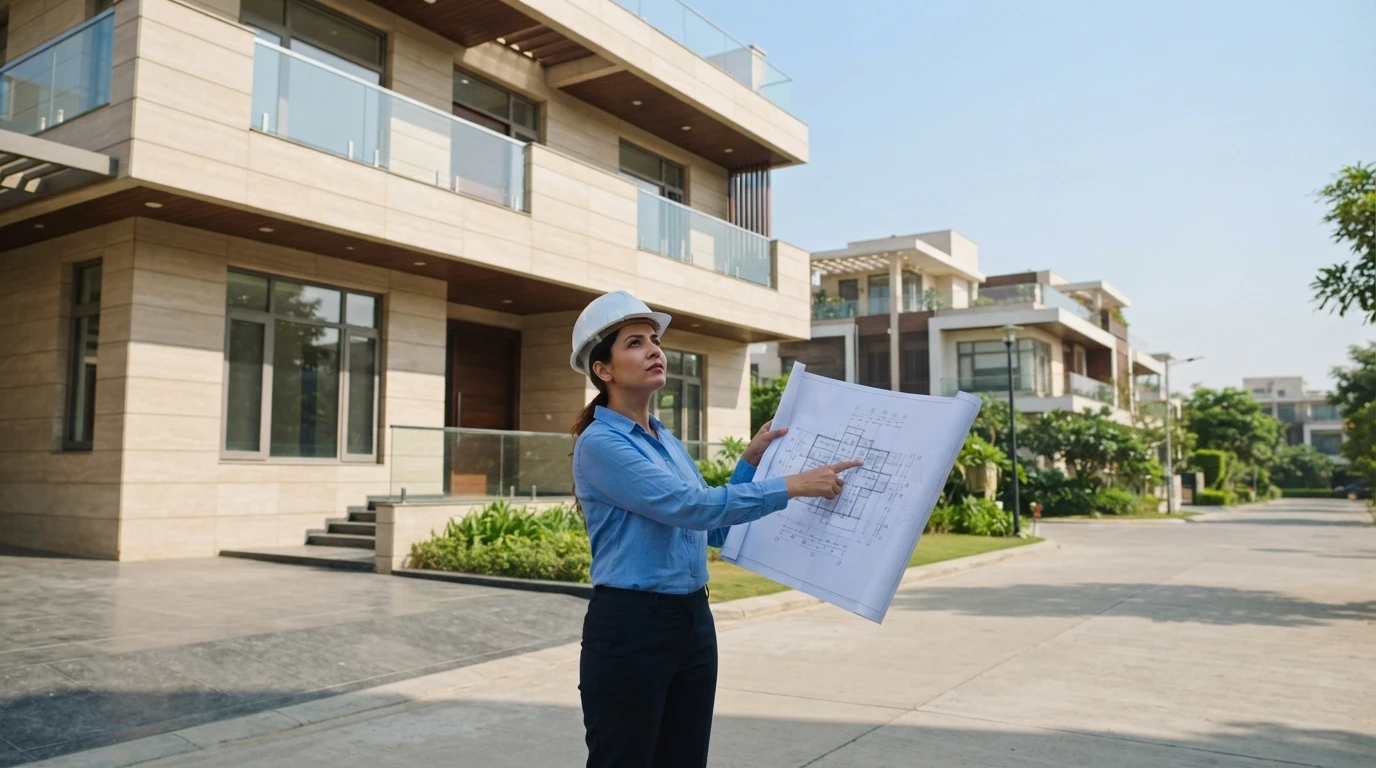
A legal builder floor rests on four pillars: clean land approvals, a sanctioned plan within permitted FAR, RERA registration where it applies, and the occupancy and completion certificates at the end. Miss any one and the weakness follows the flat to resale.
Land-level approvals to demand and verify
Start with the land, not the floor. Ask for the CLU (change of land use) or the developer licence under the Haryana Urban Development Act, the sanctioned layout plan, and proof that the plot itself is freehold and mutation-registered. On colony land, also check the plot falls inside the approved internal layout, not an amalgamated or subdivided piece. Any hesitation here ends the conversation.
The sanctioned building plan and FAR, where most independent floors fail quietly
The most common failure is a sanctioned plan that does not match what was built. FAR, or floor area ratio, caps total built-up area a plot may carry. When a builder adds a floor, extends the stilt or covers a terrace beyond sanction, the building breaches FAR. Gurugram’s approvals are processed online through HOBPAS, the Haryana online building plan approval system, so a copy of the actual sanction exists for every legal structure.
Demand the sanctioned plan, then have an architect measure the as-built areas against it. A breach means either regularisation at a cost, or a structure that no authority will ever certify. At Rs 4-10 crore, the latter is unbuyable.
How to check RERA registration for a builder floor project in Gurgaon
If a project is marketed before completion, Haryana law requires it to be registered with HRERA. The check takes ten minutes. Go to the Haryana RERA portal, search the project under Registered Projects, and confirm the registration number, promoter name, sanction details and validity. We set out what this registration actually gives a buyer in our note on RERA-approved builder floors in Gurgaon.
Match the name on the RERA certificate to the entity signing your sale agreement. A different signing entity is a red flag.
Do I need an OC and CC before buying a luxury builder floor in Gurgaon?
Yes. The completion certificate (CC) confirms the building was built per the sanctioned plan; the occupancy certificate (OC) confirms it is fit to occupy. Without them, banks hesitate on loans, water and power connections stay provisional, and resale buyers discount heavily. If the OC is pending, price the risk or walk.
What does the agreement and payment trail need to say?
The builder buyer agreement (BBA) should mirror the title opinion. Every condition you made part of the deal must appear in the contract, not in a brochure or a WhatsApp promise. If the clause is not written, it does not exist.

Conditions precedent and refund clauses that actually protect you
Ask for three protections in writing. First, conditions precedent: title clearance, approved plans and licences stay conditions, so the deal closes only when the papers hold up. Second, a defined refund: if a condition fails, your money comes back within a fixed number of days, with interest. Third, delay compensation from the builder, not just from you. An agreement where penalties run one way only is a red flag. Walk away from that one.
Milestones, carpet area and how the numbers must reconcile
Payments should follow construction milestones, such as plinth, structure and finishes, with each stage certified by the engineer or architect. Insist on carpet area in the agreement. If pricing runs on super area, get the carpet figure and the ratio stated, then check both against the sanctioned plan. The numbers must reconcile across the drawing, the agreement and the demand letter.
Under-construction interest, GST and registration
Under-construction purchases attract 5% GST. Pay every instalment through banking channels, and register the sale deed at the sub-registrar on possession, since an unregistered deed transfers no title.
How do these checks hold up at resale or when the builder goes quiet?
The same file that protects your purchase becomes your selling asset. Two scenarios test it: the day you resell, and the day the builder stops answering calls.
What a resale buyer will ask, and why it mirrors your booking checks
A serious buyer at Rs 4-10 crore runs your file backwards. They will want the 30-year title search, the mutation entries, the licence chain, and a clear view of what banks actually check before funding a builder floor. If you bought with clean papers, their lawyer finishes in a week. If you papered over a gap, the deal stalls exactly where yours did.
If the builder or developer goes quiet
This is where freehold builder floors differ from under-construction apartments. Once the sale deed is registered and the property is mutated in your name, your ownership does not depend on the developer’s survival. The risk sits in unfinished common work: stilt parking, lifts, external finishes, or the occupation certificate for the remaining floors. Check what your agreement actually obliges the builder to deliver, and photograph the handover condition of every common area. RERA covers registered projects; an unregistered floor relies on the sale deed alone.
The permanent file
Keep one folder, physical and scanned: the title search report, the lawyer’s opinion, the sale deed, the mutation record, the sanctioned plan, the completion and occupation certificates, tax receipts, and the handover notes. A complete file is what a buyer’s lawyer reads first, and it is why one house sells in ten days while an identical one waits a quarter.
Common mistakes to avoid
Errors that recur in Gurugram transactions
Most losses at this price point come from shortcuts, not fraud. The recurring ones:
- Stopping the title trace too early. A 15-year chain looks clean because the problem sits in a 1960s mutation. Cover the full 30 years or walk away.
- Trusting the builder’s lawyer’s report. Appoint your own counsel. Their opinion protects the seller.
- Confusing licence with title. A valid Haryana licence does not cure a broken land chain.
- Skipping the occupancy and completion certificates, then discovering the floor cannot be insured, funded or resold cleanly. The certificate checklist for Gurgaon builder floors lists what to verify before you pay.
- Paying advances before the file is complete. Escrow or nothing.
Each mistake is cheap to prevent and expensive to unwind.

A 30-year title search tells you what you’re buying. Walking the land with the person who built it tells you the rest. If you’d like a private site visit or a direct conversation with the founder, contact Homezop. No pressure, just answers.
Frequently Asked Questions
Q1: What legal checks should I do before buying a builder floor in Gurgaon?
Nine checks: 30-year title trace, jamabandi and mutation, freehold status, licence or CLU, sanctioned plan, RERA registration, encumbrance search, builder agreement, and registered sale deed.
Q2: How do I verify land title and ownership before booking an independent floor in Gurugram?
Trace the mother deed forward through every sale deed, matching khasra and khewat numbers, then confirm mutations on the Jamabandi portal yourself.
Q3: Is an OC and CC required before buying a luxury builder floor in Gurgaon?
Yes. The completion certificate proves sanctioned-plan compliance; the occupancy certificate proves it is fit to live in. Without both, funding and resale suffer.
Q4: How do I check RERA registration for a builder floor project in Gurgaon?
Search the project on the Haryana RERA portal. Confirm the registration number, promoter name and validity match your signing entity.
Q5: What is the difference between freehold and leasehold land for builder floors in Gurugram?
Freehold means absolute ownership; leasehold means HSVP retains the land and you hold occupancy rights for a term, with conversion and transfer conditions.
Q6: Should I get a lawyer to check the title deed before buying a floor in Gurgaon?
Yes, appoint your own counsel before final price talk, and demand a written 30-year title report with defects listed.
Q7: How do I check approvals like fire NOC and building plan before buying a floor?
Demand the sanctioned plan, verify it through HOBPAS, and ask for the fire NOC plus occupancy certificate before paying.
Q8: What GST and registration charges apply when buying a builder floor in Gurgaon?
Under-construction purchases attract 5% GST; ready floors none. Register the sale deed at the sub-registrar and pay stamp duty on possession.
Conclusion
The legal file, not the floor plan, decides whether a Rs 4-10 crore builder floor in Gurgaon is worth buying. Run the nine checks in order: a 30-year title trace, mutation on the Jamabandi record, freehold status, licence and sanctioned plan, RERA registration, encumbrance search, a balanced agreement, and a registered sale deed. Verification comes before every payment. Do this and you hold a permanent file that banks fund, insurers cover and resale buyers clear in days. Skip a step, and the gap follows the house to the next owner.