
Quick Summary: Pick an apartment in Gurgaon if you want a manned gate, clubhouse, and maintenance handled for you, especially with kids under six. Pick a builder floor if you want a real undivided share of the land, more carpet area for the same budget, and no shared walls. The article warns that a 2,500 sq ft apartment can shrink to 1,700-1,900 sq ft of carpet area, so always check the sale deed rather than the brochure. Homezop, which builds luxury independent floors, says it hands buyers the full land-share math upfront and invites them to walk a finished floor before deciding.
The builder floor vs apartment Gurgaon question has a practical answer. An apartment suits families who want a manned gate, a clubhouse, and maintenance handled for them. A builder floor in Gurgaon may suit buyers who want a lower-density home and a verified share in the plot. Families with children under six who specifically want a guarded gate may be better served by a society.
The problem is that two homes with the same bedroom count can differ sharply in usable area, ownership rights and daily responsibility. As a builder of luxury independent floors, I compare the independent floor vs flat honestly here: what the deed conveys, family fit, shared costs, and the low rise vs high rise Gurgaon resale case. Verify every price and specification in writing.
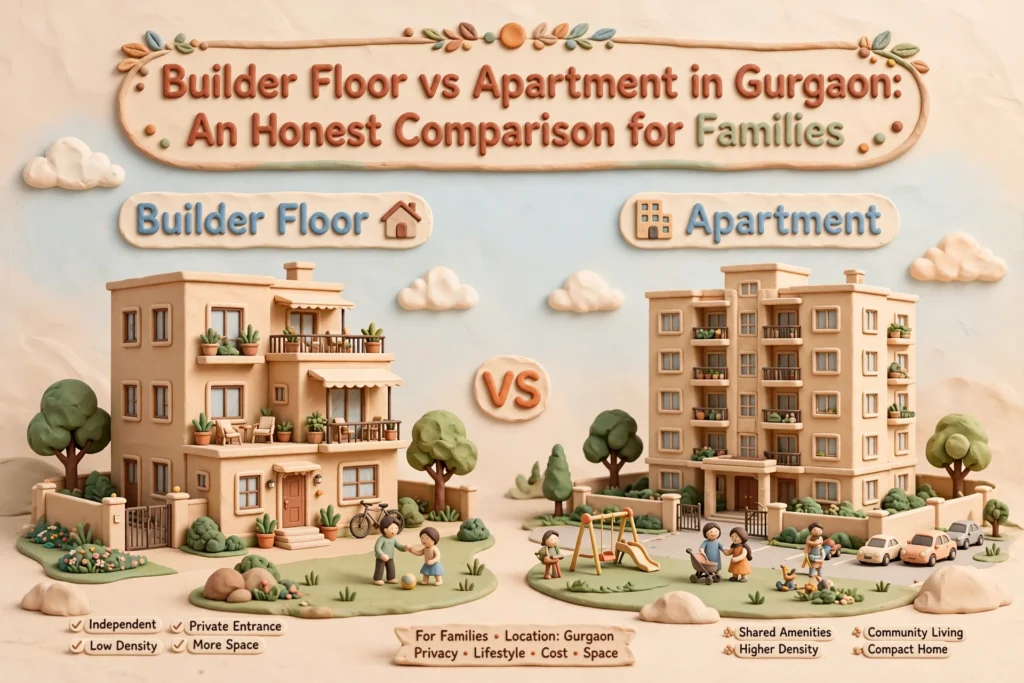
Builder Floor vs Apartment in Gurgaon: At a Glance
| Builder floor | Society apartment | |
|---|---|---|
| Ownership and land share | Verify the deed for title, undivided share, tenure, and common-area rights. | Verify the conveyance, apartment rights, and project documents. |
| Usable space | Compare documented carpet area with the quoted super area. | Compare carpet area with super area and identify shared-area loading. |
| Security and amenities | Depends on the building and locality; verify any gate, staffing, and facilities. | May offer a manned gate, clubhouse, and shared facilities; verify what is operational. |
| Maintenance responsibility | Owners typically coordinate shared systems and common-area upkeep. | Common services are generally coordinated by the society or appointed manager. |
| Family and resale fit | May suit buyers prioritising lower density; resale depends on location and documentation. | Often fits buyers seeking managed services; demand and resale vary by project and location. |
How Builder floor and Society apartment Compare
The builder floor vs apartment Gurgaon question comes down to two very different ways of owning a home. Here is what each one actually is.
Builder floor
A self-contained home on one level of a low-rise building, where your rights are defined by the registered deed. It suits buyers who want lower density and a clearer link to land. The details that matter sit in the documents, not the brochure.
Key strengths
- Direct title with an undivided land share
- Lower density living
- Owner control over upkeep
Society apartment
A home within a multi-unit development where common services are managed by the developer or a residents’ body. It fits families who prefer a manned gate and shared facilities handled for them. What you get depends on the project, so verify what is operational.
Key strengths
- Manned gate and clubhouse
- Maintenance coordinated centrally
- Deeper resale demand in many projects
What Does Ownership Actually Include?
In the builder floor vs apartment Gurgaon debate, this is where buyers most often get surprised. What you own is written down, not implied.
How to Check the Floor’s Land Share
An independent floor is registered as a portion of a freehold plot. Your sale deed should record your undivided share of that land, often expressed as a percentage or in square yards. Ask for the conveyance deed and confirm the plot area matches the record in the jamabandi. Then verify the floor plan sanctioned by the Municipal Corporation of Gurugram covers the floor you are buying. If a seller cannot produce these documents, walk away. At Homezop we hand buyers the full land-share math before they ask.

What Apartment Documents Establish
A society flat proves ownership of the built unit only. The land beneath sits with the developer or the residents’ society, and your title rests on an Allotment Letter, a Buyer Agreement, and eventually a Conveyance Deed plus society membership. Check the RERA registration, the occupancy certificate, and whether the conveyance has actually happened in older projects. Both formats can be safe. The difference is what the paperwork covers, so read it before you commit.
How Do Space and Daily Living Compare?
Compare Carpet Area Before the Brochure Area
Start with carpet area, the floor space you can actually walk on. In Gurgaon, a society apartment advertised at 2,500 sq ft may deliver 1,700-1,900 sq ft of carpet area once common corridors and walls are excluded. A builder floor is usually quoted closer to its real usable space, so check the sale deed figures, not the brochure.
Layout matters as much as area. A floor gives you a full plate: rooms on one level, no neighbours above or below, often a stowaway room in the basement and a terrace for the kids. An apartment stacks that same area across one floor of a tower, then adds a clubhouse, pool and gym you did not have to build.
Daily living splits along those lines. In a society, housekeeping, power backup and repairs are handled by the facility team. On a floor, you arrange these yourself or through your builder.
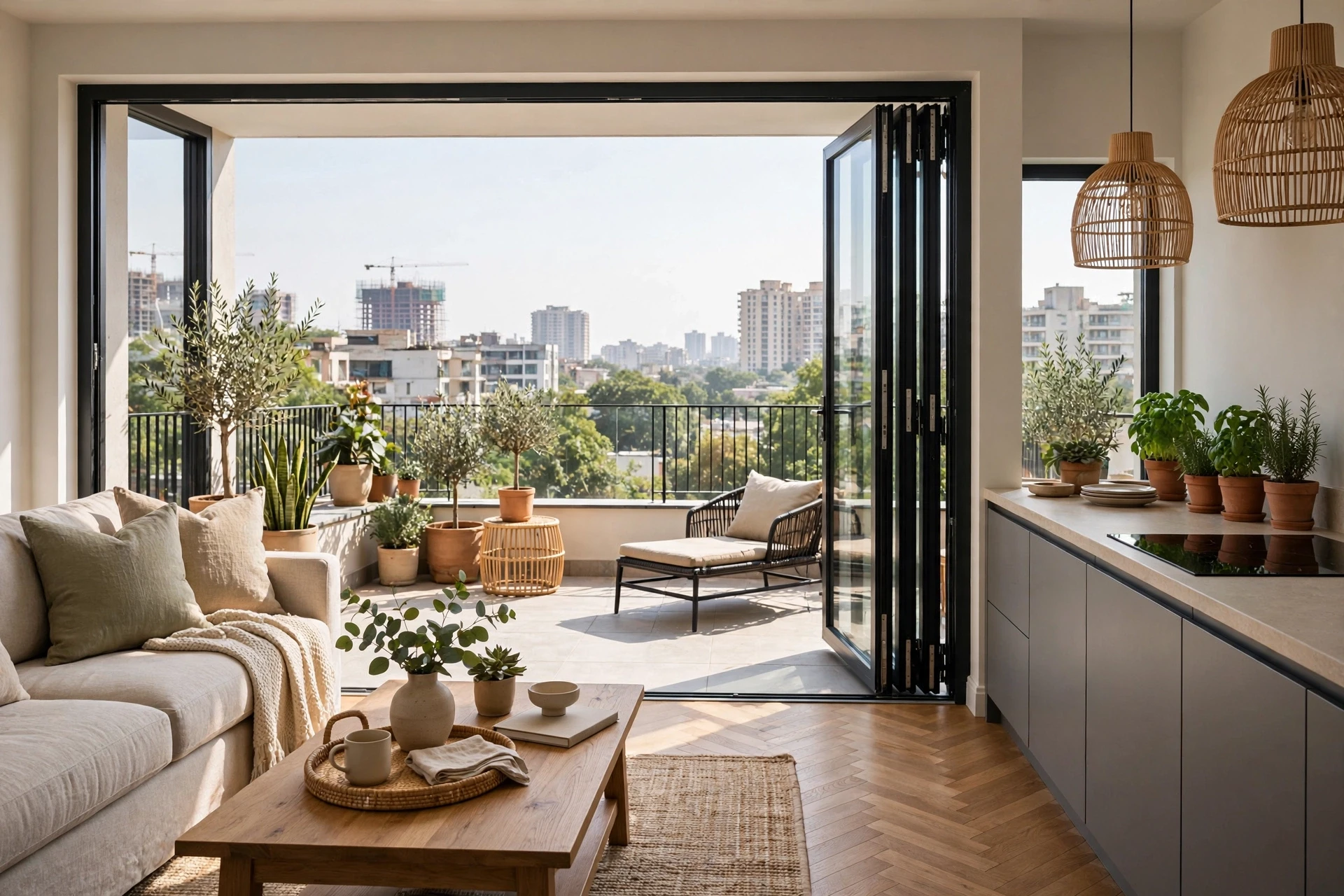
A family with children under six who wants a guarded gate may genuinely be happier in a society. Our own luxury independent floors suit buyers who want villa-like privacy instead.
How Do Space and Daily Living Compare?
Compare Carpet Area Before the Brochure Area
Start with carpet area, the floor space you can actually use. In Gurgaon, a society apartment advertised at 2,500 sq ft may deliver 1,700-1,900 sq ft of carpet area once common corridors, lift lobbies and walls are excluded. Builder floors are usually quoted closer to the real usable space, so ask for the figure in the sale deed, not the brochure.
Layout matters as much as area. A floor gives you a full plate: all rooms on one level, no neighbours above or below, often a basement room and a private terrace. An apartment fits that same area into one slice of a tower, then adds a clubhouse, pool and gym you did not have to build or fund.
Daily living splits along the same lines. In a society, housekeeping, power backup and repairs are handled by the facility team. On a floor, you arrange these yourself.
A family with children under six that wants a guarded gate may be better served by a society. Buyers who prefer villa-like privacy can explore our luxury independent floors instead.
Which Option Fits a Family’s Security and Service Needs?
What a Guarded Society Provides
A society apartment answers the security question before you ask it. A manned gate, CCTV, visitor checks and guards on patrol come as standard, and the RWA handles them. For families with children under six who want that guarded gate every day, a society is often the honest answer. The clubhouse, pool and common areas are managed for you. Housekeeping, power backup and pest control sit in one monthly bill. You trade some privacy and land share for this convenience, and for many young families that trade makes sense.

The Work and Cost of Managing a Floor
An independent floor gives you control, but control means work. Security is whatever you arrange: gates, cameras and a guard, usually funded with your co-owners in the building. Some colonies offer colony-level gates; many do not. Housekeeping, horticulture and repairs are yours to contract and supervise. Budget for it and hold a maintenance reserve from day one. [VERIFY: typical monthly staff and upkeep cost for a builder floor in Golf Course Road or Sector 57]. A well-run floor feels like a private villa. A neglected one shows it within two years.
How Should Buyers Compare Risk, Resale, and Rental Potential?
What to Verify Before You Commit
Risk differs by format. In a society apartment, the builder’s title, approvals and maintenance are largely standardised, so your paperwork burden is lower. With a builder floor, you are buying a share of land plus a constructed unit, so verify more before you pay anything.
Check these documents first:
- Title and chain of ownership: confirm the seller actually owns the land share and it is free of mortgages or disputes.
- Approval status: check the sanctioned building plan and RERA registration where it applies.
- Carpet area vs super area: insist on carpet area in writing, since super built-up can inflate a floor’s apparent size.
- Occupancy and completion: no possession handshake before the occupation certificate is issued.
- Co-owner agreements: in a floor, you share staircases, roof rights and parking; get these in writing.
Resale depth favours apartments because more buyers can afford them. Floors sell to a smaller, more specific buyer, which can mean a longer wait at your price. Rentals run the other way: families seeking space rent floors readily, so check actual rents in the sector rather than broker quotes. Our due diligence guide covers the full checklist.
Which Should Your Family Choose: A Builder Floor or an Apartment?
There is no universal answer. The right choice depends on how your family actually lives, not on what looks better on a site visit.
Choose an apartment if you want a manned gate, a clubhouse, power and maintenance handled by a facility team, and deep resale demand. Families with children under six who value a guarded, self-contained campus are often better served by a society. That is a fair trade, and we say so plainly.
Choose a builder floor if you want more carpet area for the same budget, a meaningful share of land, no shared walls with dozens of neighbours, and control over your own upkeep. Privacy and a villa-like feel are the real draws.
Before deciding, check the same documents in both cases: title, land share, RERA status, and what the maintenance actually covers.
If you want to see how a well-built floor compares in person, our Gurugram floor projects are open for a quiet visit, or a direct conversation with me.

If you are weighing a floor against an apartment, walk a finished Homezop floor first. Ask us anything directly, or book a quiet site visit at Homezop.
Frequently Asked Questions
Q1: Which builder floors in Gurgaon offer the highest land share?
Low-rise floors in sectors like 57 usually carry larger plot share. Ask for the exact percentage in writing.
Q2: Which top builders offer luxury floors in Gurgaon?
Several established Gurugram builders work in this space, including Homezop, focused on low-rise legacy floors.
Q3: Is a builder floor better than an apartment for a family in Gurgaon?
For privacy and land share, yes. Families with children under six may prefer a guarded society.
Q4: What is the difference between a builder floor and an apartment in Gurgaon?
A floor gives you a freehold unit plus plot share. An apartment shares common facilities and services.
Q5: Which is a better investment in Gurgaon: builder floor or apartment?
Floors track land value; apartments offer deeper resale demand. Match the choice to your exit horizon.
Q6: What are the maintenance costs of a builder floor versus an apartment?
Apartment societies charge monthly maintenance. Floor owners pay directly for staff, power backup and repairs. [VERIFY: current figures]
Q7: Which areas in Gurgaon are best for buying a builder floor?
Golf Course Road, Sector 57 and Nirvana Country see steady demand for well-built floors.
Q8: Do builder floors offer amenities and security like gated apartments?
Some premium floor projects include gated entry and power backup, but clubhouses remain an apartment advantage.
A Clear Decision for Your Family
Choose the society apartment if you want a guarded gate, a clubhouse, and maintenance handled for you. That is an honest win, especially with children under six. Choose a builder floor if you want land share, no shared walls, and full control over your home. Check the ownership documents, the construction spec, and the micro-market before you commit to either. In Gurgaon, both formats hold value when the location is right. The deciding factors are your family’s daily routine and what you actually want to own.