
Quick Summary: A Gurgaon builder floor usually resells for Rs 4-10 crore, but its land share, location and clean title matter more than citywide averages. Value your undivided land at local rates, add depreciated construction value, then account for floor level, parking and approvals. Established areas such as Golf Course Road, DLF Phases and Nirvana Country offer steadier resale prices, while new corridors carry more volatility.
Two floors on the same street in Nirvana Country can differ by more than a crore at resale. The reason is simple: how much land each one carries, and how clean its approval chain is. Construction gets demolished and rebuilt in fifteen years. Title does not. Most buyers of a luxury builder floor in Gurgaon discover this too late, when the resale offer arrives well below what the brochure promised. As builders of independent floors across Gurugram, we judge every project by two things first: land share and paperwork. This guide shows how to do the same, with a method to value the land you actually own, sector-level pricing logic, and the documents that decide whether you get full price on exit.
What is the resale value of a luxury builder floor in Gurgaon?
A well-located luxury builder floor in Gurgaon resells between roughly Rs 4 crore and Rs 10 crore today. Citywide averages sit near Rs 13,000 per sq ft on Housing.com, but premium pockets trade far higher, so the honest answer depends on your sector, your plot and your paperwork.
Why headline Gurgaon appreciation does not apply to your floor
Headline numbers describe the average city, not your street. Rates run from about Rs 11,000 per sq ft in Sector 82, per Magicbricks, to Rs 17,000-23,000 in DLF Phase 1. Two floors of the same size can sit Rs 2-3 crore apart because of sector, colony profile and floor level. Judge resale value sector by sector, never by the Gurgaon average. Our guide to the best sectors for builder floors in Gurgaon breaks this down.
The land share and construction split
Every floor price has two parts: the land under the building and the structure above it. On a 300 sq yd plot split into four floors, your undivided land share is 75 sq yd, and that land is what appreciates. Construction depreciates; fittings age. In premium colonies, analysts estimate 60-70% of pricing reflects land value, according to Assured Gains. Know your split before you price an exit.
Which micro-locations in Gurgaon hold resale value best?
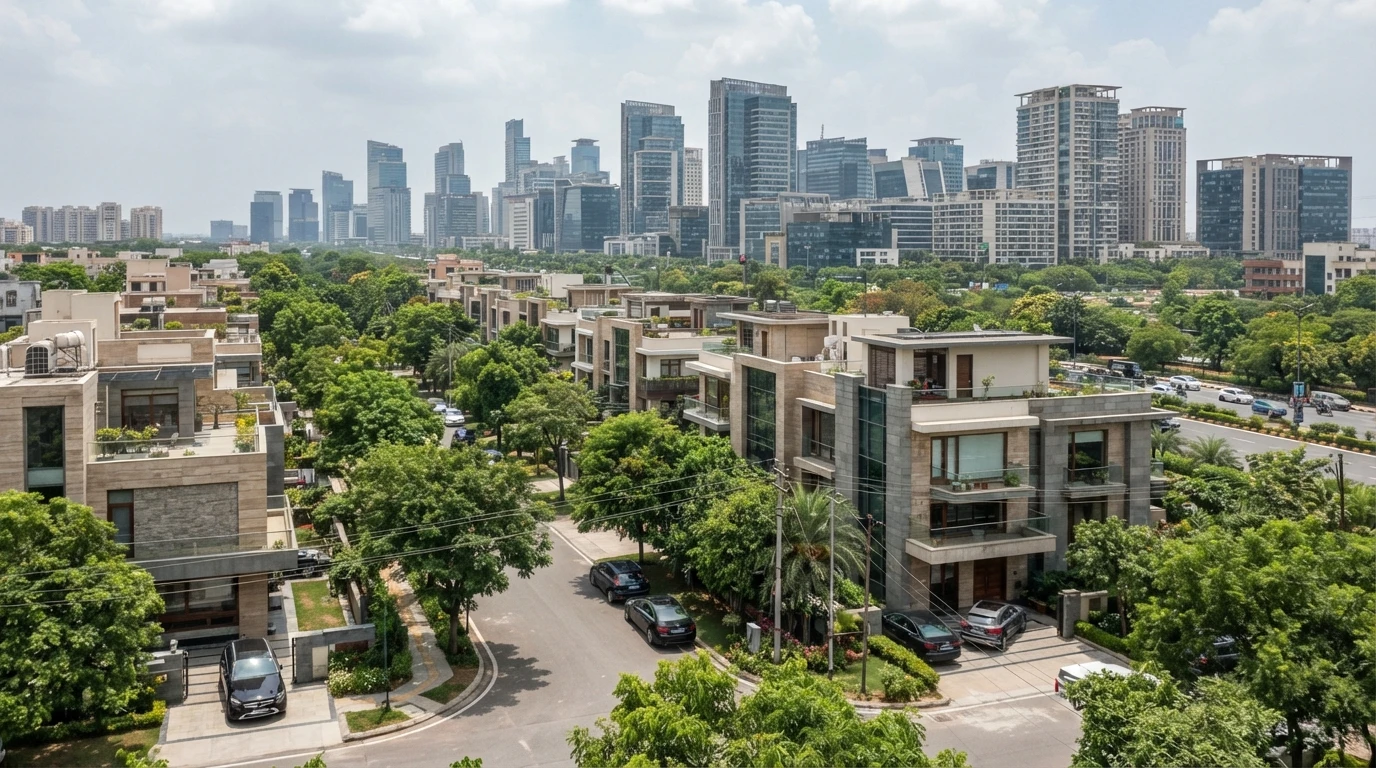
Location decides most of your resale outcome. In Gurgaon, the split is fairly clear: established low-rise colonies hold price, while new corridors offer appreciation at higher risk.
Established low-rise pockets versus New Gurgaon growth corridors
Older sectors south of MG Road and around Golf Course Road, the DLF Phases, Sector 57 and Nirvana Country, hold value best. Freehold plots, mature colony character and scarce new supply keep buyers bidding even in slow markets. Premium deals here reach Rs 18,000-30,000 per sq ft, per a Golf Course Road investment guide. We cover these Gurgaon micro-locations for luxury floors in detail. Because land drives 60-70% of the price here, your exit is protected even if construction trends date.
Expressway and fringe corridors
Dwarka Expressway, Sectors 81 to 115, and New Gurgaon work differently. Supply is large and mostly high-rise, so resale prices swing with project deliveries and infrastructure news. Builder floors there trade around Rs 11,000-13,000 per sq ft, per Magicbricks listings. Appreciation potential is real, but you buy volatility. Established pockets buy stability.
Do builder floors hold value better than flats?
In older Gurgaon sectors, yes. A floor’s undivided land share does the heavy lifting, and land in premium colonies drives 60-70% of the price. In new corridors, the answer flips, because supply there is deep and land shares are thinner.
Where a floor outranks an apartment
Independent floors win where land is scarce and buyers want privacy. An honest floor versus apartment comparison comes down to three things: your share of the plot, no society re-development risk, and control over your own unit. A high-rise flat depreciates as its tower ages; a floor sits on land that keeps compounding. Lifts, lobbies and common areas need no committee approval to repair on your own timeline.

Where an apartment outranks a floor
Flats win where management and amenities carry the value. A gated township on Dwarka Expressway offers a clubhouse, power backup and security that hold tenant and buyer demand on their own. Branded developments also price with more transparency, since every resale of a similar unit resets the benchmark. On long-term appreciation, compare the land share behind each option before the brochure.
Bottom line
A floor’s value rises with the land under it, while an apartment’s value depends on how well the project is run.
How do you calculate the resale value of your builder floor?
Split the property into land and construction, price each, then adjust for the sector. Land does most of the work in Gurgaon, so start there.
The inputs you need before you calculate
Gather five numbers before you attempt any estimate.
- Undivided land share. On a 300 sq yd plot split into four floors, your share is 75 sq yd. Confirm it on the conveyance deed, not the brochure.
- Prevailing land rate for your sector. Check recent registered deals on portals, then cross-check against the government’s circle rates, which set the floor for stamp duty in each colony.
- Built-up area and construction age. Older structures fetch less per sq ft, even in prime sectors.
- Floor level and parking count. Upper floors with covered parking typically trade above ground units in the same building.
- Paperwork status. A clear title, RERA registration where applicable, and a completed registry can swing the final number by 10-15%.
Running the numbers and sanity-checking them
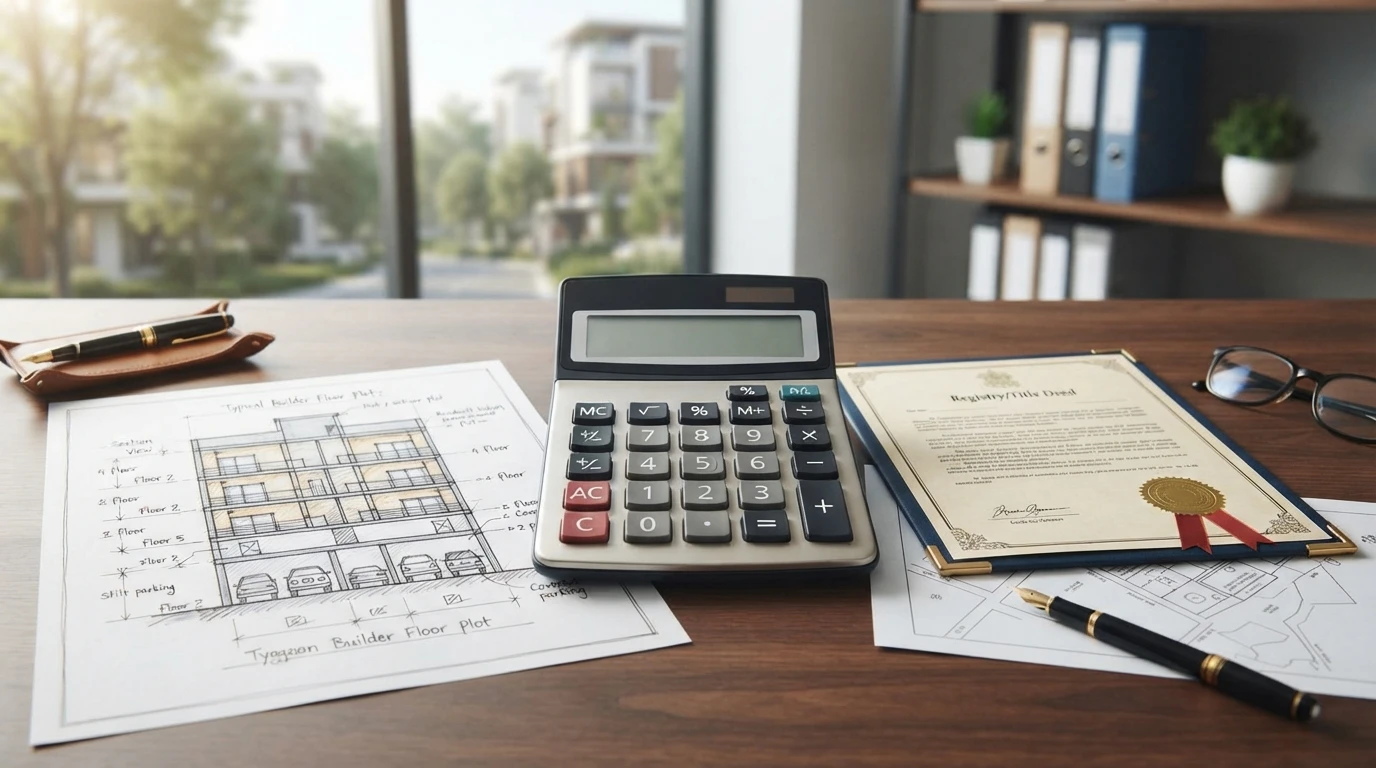
Multiply your land share by the sector’s land rate. Add the construction component at its depreciated rate. That gives a base value.
Then apply two checks. First, compare against actual recent sales in the same colony, not asking prices. Second, check the floor’s rate per sq ft against the sector averages discussed earlier; if your figure sits more than 15% above them, something in your inputs is optimistic. Sector-by-sector price data helps you pressure-test that range before you set an exit price.
Can you rent it out while you wait, and does that help at resale?
Who actually rents a large floor
Yes, and the tenant pool is more stable than most buyers expect. In premium pockets, the demand comes from relocating executives, expatriate families and NRIs who want space without the upkeep of a full plot. Areas around Golf Course Road, DLF Phase 5 and Golf Course Extension draw the strongest expatriate tenants, so a well-built floor there rarely sits empty for long. Expect roughly 2.5 to 3.5% gross yield, per a Golf Course Road rental study. Rent covers upkeep, not returns.
How rental history affects the exit
A rented floor neither helps nor hurts price much; the buyer pays for the asset, not your lease. What does matter is condition. A tenant who has lived well leaves you a home that shows cleanly, and that speeds the sale. A badly managed tenancy, with patched walls or disputed notice periods, costs you more than the rent ever earned. Sell vacant, with paperwork complete, and you negotiate from strength.
What documentation must be clean before you sell?
Paperwork decides whether you get full price. As noted earlier, a clear title, RERA registration where it applies, and a completed registry can move your number by 10-15%.
Title, leasehold and the land share
Start with the chain of ownership. Your sale deed, the earlier conveyance deed through which the builder or landowner transferred rights, and the mother deed showing the plot’s history must all be registered and consistent. Then check mutation, the municipal record that puts your name on the property. If your name is missing there, a buyer’s lawyer will flag it and negotiate down. Finally, confirm your undivided share of land is written into the title, because that share is what the buyer is really paying for.
Approvals, dues and the sale process
Next, collect the approvals and closure proofs. An occupancy certificate and completion certificate confirm the floor was built as sanctioned; lenders ask for both. Add the latest property tax receipts, the society or RWA no-dues letter, a bank loan closure letter if a mortgage exists, and the electricity and water dues cleared. With these in one file, your sale closes in weeks instead of months.

If you want a floor built to hold its value at exit, talk to us at Homezop. As a Gurugram builder, I will walk you through land share and resale math, or arrange a private site visit. No pressure.
Frequently Asked Questions
Q1: What is the resale value of a luxury builder floor in Gurgaon?
Typically Rs 4-10 crore, depending on sector, land share and paperwork.
Q2: How much do luxury floors in Gurgaon appreciate over 5 years?
Appreciation tracks land rates; premium sectors compound faster than new corridors.
Q3: Which micro-locations in Gurgaon give the highest resale returns?
Golf Course Road, DLF Phases, Sector 57 and Nirvana Country.
Q4: Do builder floors in Gurgaon hold value better than flats?
Yes, in established pockets, because land drives 60-70% of price.
Q5: What affects the resale price of an independent floor in Gurugram?
Land share, sector rates, floor level, age and title cleanliness.
Q6: How do I calculate the resale value of my builder floor property?
Multiply land share by sector rate, add depreciated construction value.
Q7: Is it worth buying an independent floor in Gurgaon for investment?
Yes, if land share is large and the colony is scarce.
Q8: What legal documents are needed to resell a builder floor in Gurgaon?
Sale deed, conveyance deed, mutation, occupancy certificate, tax receipts and no-dues letters.
Conclusion
A luxury builder floor in Gurgaon is an asset only if you judge it the way a buyer will: by land share, sector and paperwork. Established pockets like Golf Course Road, the DLF Phases and Nirvana Country reward scarcity, while new corridors trade on volatility. Construction ages; land and title do not. Run the land-plus-construction calculation before you price an exit, and keep every approval in one file. Do both, and your floor exits at full price rather than a discount.